Autobiography of a Yogi
How should a modern reader distinguish spiritual testimony, metaphor, hagiography, and literal claim?
A respectful but evidence-bounded reading of spiritual vocation, discipline, and self-realization.

The library
Browse maintained lenses by book, author, or the question each lens keeps open.
77 books
How should a modern reader distinguish spiritual testimony, metaphor, hagiography, and literal claim?
A respectful but evidence-bounded reading of spiritual vocation, discipline, and self-realization.
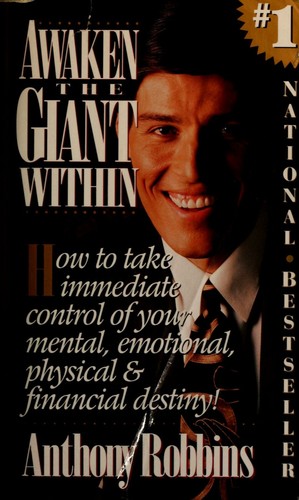
When does an assertion of personal agency create movement, and when does it conceal constraint or turn suffering into personal failure?
A bounded lens on decisions, emotional state, belief, and deliberate change in a highly promotional self-development tradition.
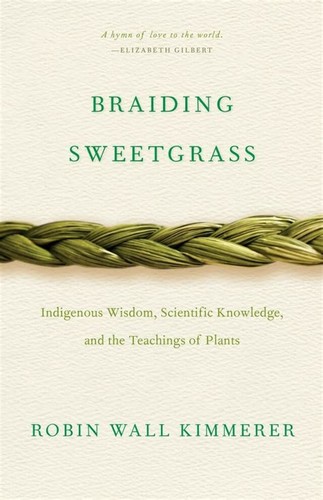
What changes when gratitude is treated not as a feeling but as an obligation of reciprocity?
A lens on the meeting of Potawatomi teaching, botanical knowledge, story, and reciprocal responsibility that refuses to extract Indigenous thought into generic wellness advice.
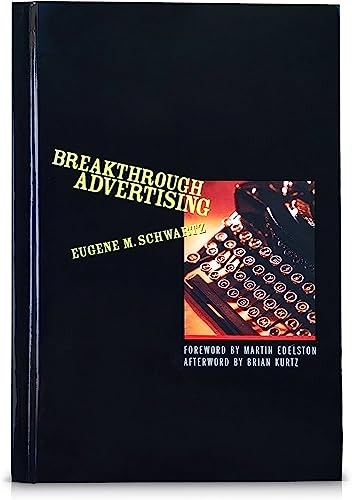
If persuasion works by channeling existing desire, where does skilled communication end and exploitation begin?
A lens on market awareness, desire, direct-response craft, and the ethical duties created by powerful persuasion.
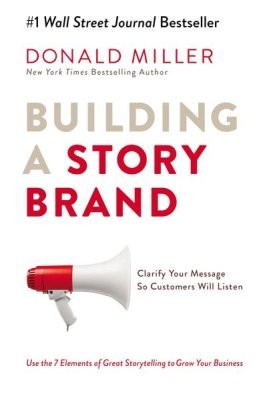
Does making the customer the hero create clarity, or flatten every human relationship into a conversion story?
A lens on narrative clarity, customer empathy, persuasion, and the ethical limits of formulaic marketing.
Why do old corporate stories remain useful after their markets and institutions change?
A lens on business cases as records of recurring judgment under changing conditions.
When is staying small a deliberate definition of enough, and when is it avoidance?
A lens on autonomy, resilience, and sufficiency as alternatives to growth by default.
How do we distinguish courageous realism from a leader's confidence that only their interpretation is reality?
A lens on external facts, business models, dissent, and the governance needed to keep realism from becoming executive certainty.
Can a life be prototyped without treating grief, duty, or structural constraint as a design problem?
A lens on generating several viable futures, testing assumptions through small encounters, and treating career direction as inquiry rather than revelation.
What can community enterprise traditions teach without turning a diverse people into a business stereotype?
A lens on family enterprise, community capital, adaptation, and the survivorship bias inside exemplary business stories.
How can Mapping, Making, and Meshing work together to turn potential into meaningful output?
A personal reading of productive work as a cycle of direction, execution, and growth, guided by deliberate urgency.
Does entrepreneurial discipline reduce avoidable uncertainty, or create false confidence in a process that cannot remove market discovery?
A lens on structured customer discovery, market choice, economics, experimentation, and the nonlinearity of venture creation.
When does cultural preparation improve collaboration, and when does it harden into national stereotyping?
A lens on using cultural patterns as questions for cross-border work without treating nationality as personality.
What does a person preserve when intimacy becomes both labor and a search for transcendence?
A literary lens on sex work, migration, autonomy, desire, and the limits of turning another person's life into spiritual metaphor.
What changes when I stop waiting for fear to disappear and act while it is still present?
A lens on fear as a recurring companion to unfamiliar action, and on the uncommon advantage earned by people who move before confidence arrives.
Which parts of life should be won, and which are damaged when treated as contests?
A philosophical lens distinguishing bounded contests from practices sustained by changing participation, with safeguards against turning a memorable binary into a total theory.
Does deep absorption make an activity meaningful, or can flow hide what the activity is doing to us and others?
A lens on challenge, skill, attention, and intrinsic reward that treats flow as information about experience, not proof that an activity is valuable or harmless.
If time can never be mastered, what deserves the finite portion we can actually give?
A counter-productivity lens on finitude: the task is not to fit everything in, but to choose what will receive a life while accepting what must remain undone.
When do explicit goals create direction, and when do they make us optimize the wrong life?
A lens on written goals, feedback, identity, measurement, and the second-order costs of focused pursuit.
What becomes possible when programming is treated as creative making, and what disappears when one subculture defines the maker?
A lens on software as craft, exploratory creation, language, taste, and the boundaries of hacker culture.
What happens when the resources of a life reveal priorities that its stated values do not?
A lens on using actual allocations of time, energy, money, and attention to test whether work, relationships, and integrity match professed priorities.
Can faith-centered stewardship produce accountable leadership when the owner's convictions also govern employees?
A lens on conviction, generosity, ownership power, religious pluralism, and the difference between benevolent intent and accountable institutions.
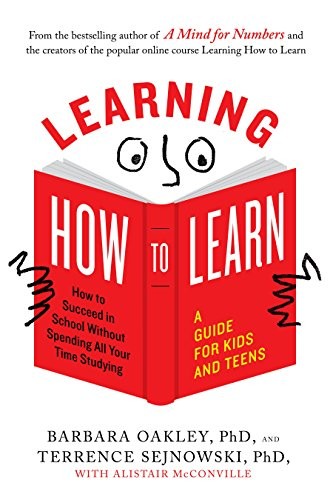
When does understanding how learning works increase agency, and when does simplified neuroscience become another study myth?
A lens on learning as active recall, connection, rest, and deliberate practice rather than a verdict on ability.
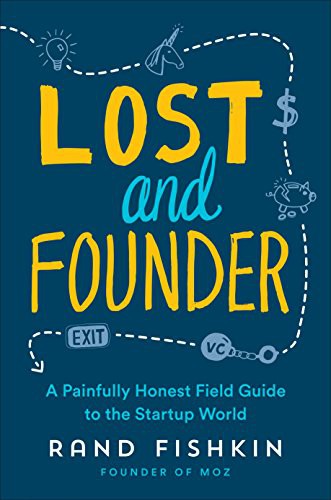
What becomes visible when a founder reports the costs that startup mythology edits out?
A lens on venture narratives, financing, founder identity, layoffs, growth expectations, and the value of candid failure.
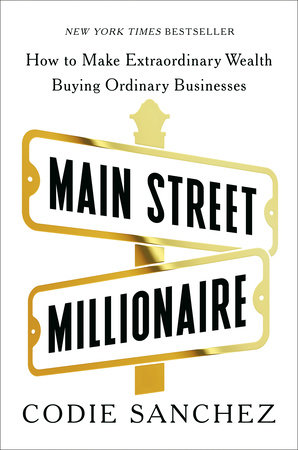
Does buying an existing business create patient stewardship, or merely turn another livelihood into an asset class?
A lens on acquisition entrepreneurship, continuity, leverage, labor, and the responsibilities that arrive with ownership.
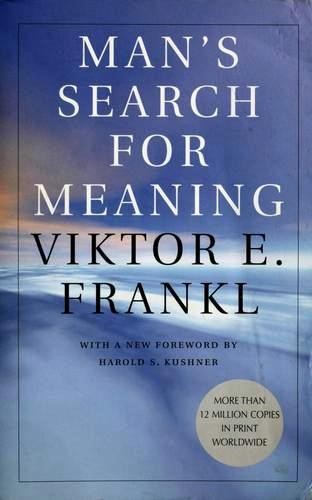
When suffering cannot be removed, what forms of meaning remain possible, and when does meaning-making become an unfair demand?
A bounded lens on Frankl's testimony and logotherapy: meaning can preserve agency under constraint, but suffering must never be treated as necessary, deserved, or automatically ennobling.
When does believing that ability can grow help development, and when does growth mindset become a way to ignore context, strategy, or structural constraint?
A bounded reading of growth mindset as permission to learn, revise strategy, seek help, and stay with difficult work without treating belief as a substitute for conditions that make development possible.
Can professional networking remain reciprocal when everyone is measuring its commercial return?
A lens on trust, referrals, social capital, and the ethical line between relationship building and instrumental contact.
Does more information improve collective wisdom, or merely increase the power of networks that organize belief?
A lens on information as representation, connection, coordination, mythology, bureaucracy, and power.
Can a compassionate communication method remain honest about anger, power, and situations in which mutuality is absent?
A lens on observation, feeling, need, and request that treats NVC as a learnable communication scaffold, not a complete theory of conflict, safety, or justice.
Does defining strategy as winning clarify choice, or narrow success to dominance?
A lens on strategy as a coherent set of choices about aspiration, arena, advantage, capability, and management.
How can multidisciplinary mental models and inversion become an operating system for clearer decisions?
A personal reading of multidisciplinary thinking, connected mental models, inversion, and error avoidance in Poor Charlie's Almanack.
When do explicit principles improve judgment, and when do they turn contextual decisions into organizational dogma?
A lens on turning experience into decision rules while keeping power, context, and correction visible.
When does the demand to be remarkable improve the work, and when does it reward novelty over usefulness?
A lens on distinctiveness as product design, attention, usefulness, and the ethical cost of being impossible to ignore.
How do we make room for reflective temperaments without turning introversion into a superior identity?
A lens on the institutions and habits that reward visible assertiveness while overlooking reflective, low-stimulation, or privately developed forms of contribution.
Does attention to what persists improve foresight, or hide genuine discontinuity?
A lens on durable human tendencies as a base for judgment under uncertainty.
When do scaling patterns illuminate a system, and when do they erase history and agency?
A lens on recurring relationships between size, pace, resources, and fragility across living and social systems.
How much exposure should be required before someone may advise or decide for others?
A lens on accountability, asymmetric risk, and the limits of consequence-free expertise.
Can a behavioral shorthand improve communication without reducing people to four fixed types?
A critical lens on the practical appeal, scientific limits, and social costs of four-color personality classification.
Can a small set of thinking rules make complex systems easier to examine without making them simplistic?
A curated lens on Derek and Laura Cabrera's DSRP framework: distinctions, systems, relationships, and perspectives as repeatable structures of thought.
How can the seven habits become a practical operating system for leadership, priorities, relationships, and lifelong learning?
A personal reading of how the seven habits shaped Utpal Vaishnav's leadership, intentionality, negotiation, listening, co-creation, and learning.
Is finding one's voice an act of self-expression, contribution, or institutional permission?
A lens on voice, vocation, contribution, and enabling other people to act with judgment.
Why can organizational health become a durable advantage even when competitors can copy strategy and technology?
A curated lens on Patrick Lencioni's case for cohesive leadership, organizational clarity, repeated communication, and systems that reinforce what matters.
How can The Alchemist help a reader move through fear, discover a calling, and be transformed by pursuing it?
A personal reading of fear, calling, attention, curiosity, and transformation in The Alchemist.
How can specific knowledge, leverage, long-term relationships, and compounding change the way a person builds wealth?
A personal reading of genuine curiosity, leverage, long-term games, and compounding in The Almanack of Naval Ravikant.
When does a possibility frame enlarge responsible action, and when does it deny real constraints?
A practice-based lens on contribution, interpretation, and leadership that uses reframing to widen action while keeping evidence, power, and constraint visible.
When does modeling another person's incentives improve cooperation, and when does it reduce a relationship to calculation?
A bounded lens on strategic interdependence and the responses a choice invites.
Does creative practice require belief in inspiration, or can ritual make room for work before belief arrives?
A lens on morning pages, artist dates, and creative recovery that treats ritual as a practice for attention, not proven therapy or a compulsory spiritual program.
Is every problem soluble with sufficient knowledge?
A lens on progress through conjecture, criticism, and better explanations, bounded by tragedy and value conflict.
Does a leadership factory develop judgment, or reproduce one institution's preferred leader?
An India-centered lens on how operating systems, brands, markets, and talent practices shape leadership.
How can I reclaim agency over my life without using agency to deny reality or another person's hardship?
A bounded reading of agency, separation of tasks, horizontal relationships, present action, and the cost of living by one's own principles.
When does independence protect creative integrity, and when does it become contempt for dependence and obligation?
A critical lens on vocation, authorship, conformity, power, and the mythology of the solitary creator.
When does accepting imperfection enable honest action, and when can it excuse avoidable harm?
A lens on shame, worthiness, and belonging that separates humane self-acceptance from exemption from responsibility.
What should improve first when every part of a system appears busy but the whole system is still underperforming?
A lens on finding the constraint that governs system performance, organizing work around it, and resisting local efficiency that does not improve the whole.
If relationships are central to a good life, which relationships deserve repair, and which require distance?
A lens on longitudinal evidence linking social connection with well-being, bounded by the quality, safety, culture, and unequal distribution of relationships.
When is letting people choose healthy acceptance, and when is it avoidance dressed as emotional freedom?
A lens on control, boundaries, responsibility, and the point where acceptance must give way to action.
Must a life collapse before achievement can be separated from meaning?
A culturally cautious lens on visible success, depletion, simplicity, purpose, and spiritual borrowing.
When does voluntary digital community become legitimate self-government, and who remains accountable when members can merely exit?
A lens on online community, sovereignty, exit, public goods, and the legitimacy gap between building a network and governing people.
What deserves singular focus, and what is damaged when a priority becomes exclusive?
A lens on concentrated attention bounded by plural duties and system dependencies.
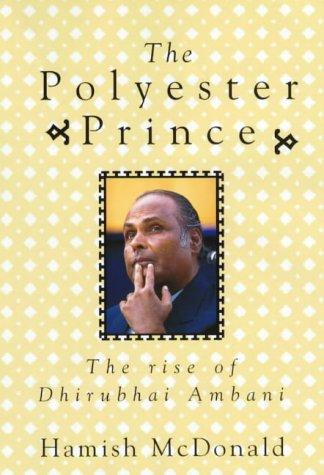
Can entrepreneurial achievement be separated from the institutional power used to create it?
A lens on ambition, corporate growth, political access, reporting, and the contested making of an Indian business legend.
When is reasonable financial behavior wiser than optimal calculation, and who can afford that margin?
A behavioral lens on money as lived uncertainty, emphasizing survival, enoughness, and temperament while restoring wages, institutions, and unequal starting conditions to the frame.
What remains useful in purposeful prosperity once metaphysical certainty and guaranteed wealth are removed?
A critical lens on disciplined economic agency, New Thought metaphysics, and the limits of treating prosperity as a guaranteed mental law.
When do small repeated choices produce meaningful change, and where does The Slight Edge oversimplify that idea?
A personal reading of compounding beyond finance, and why some projects require process excellence instead.
When do small changes produce durable transformation, and when does gradualism protect a system that needs discontinuity?
A lens on low-friction improvement, learning, and the ethical boundary between patience and avoidance.
How can changing the language through which people understand a situation change the actions that become possible?
A curated lens on Steve Zaffron and Dave Logan's three laws of performance: experienced reality, language, and future-based language.
How can treating resistance as a recurring force help a creator move from intention to disciplined practice?
A curated lens on Steven Pressfield's practical metaphor of Resistance and the shift from waiting for inspiration to showing up as a professional.
Is self-control mainly a capacity to strengthen, or a context to redesign?
A bounded reading of self-control as awareness, recovery, and environment design rather than moral force.
Did globalization flatten opportunity, or redistribute power while hiding new dependencies?
A historical lens on globalization, technology, labor, interdependence, and the limits of a powerful metaphor.
How can the thinking practices associated with rocket science improve decisions when uncertainty is high and established answers are insufficient?
A curated lens on Ozan Varol's practices for reasoning from first principles, testing assumptions, learning from failure, and turning uncertainty into discovery.
How can systems thinking move attention from isolated events to the structures that keep producing them?
A curated lens on stocks, flows, feedback, delays, resilience, system traps, and leverage points in Donella Meadows's practical introduction to systems thinking.
When should I trust my intuition, and when should I slow down?
A practical test for deciding when experience has earned trust and when consequence, novelty, or uncertainty calls for deliberate review.
Is strategy a plan for controlling outcomes, or a commitment to create conditions in which change becomes possible?
A lens on systems, choice, audiences, time horizons, and change beyond competitive winning.
When does moving another person become manipulation?
A lens on persuasion as service, clarity, and ethical influence rather than pressure.
When the future contracts, what makes a life still worth choosing from within?
A memoir-centered lens on mortality, medicine, vocation, and love that resists converting one unfinished life into a universal prescription for dying well.
Can structure reduce hiring bias without turning a person into a scorecard?
A lens on structured hiring, evidence, power, and the limits of classifying candidates as A, B, or C players.
When should I treat no as a boundary, and when should I explore what could make it a conditional yes?
A practical lens for looking beneath a visible refusal, examining the structures and motives behind it, and searching for ethical win-win alternatives.
How can a startup create something distinct instead of competing to make more of what already exists?
A curated lens on Peter Thiel and Blake Masters' argument for creating new value, finding overlooked truths, building a durable advantage, and treating distribution as part of the product.
No matching book yet. Try full-text search.