
Book lens / Published
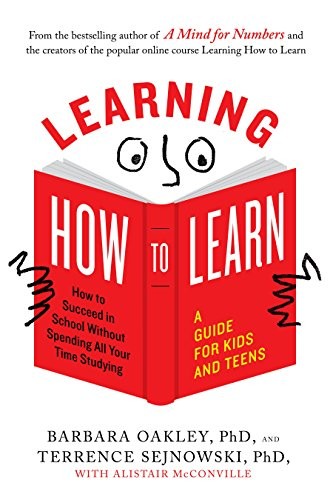
Learning How to Learn
When does understanding how learning works increase agency, and when does simplified neuroscience become another study myth?
A lens on learning as active recall, connection, rest, and deliberate practice rather than a verdict on ability.
- Edition
- ISBN 9780143132547.
- Reviewed
- August 25, 2026
- Sources
- 1
Lens
Learning improves when the learner does more than receive information. Retrieval, spaced return, explanation, practice, and rest create different kinds of contact with a subject. The book makes these moves accessible, especially to younger learners who have mistaken early difficulty for inability. Its deeper contribution is agency: a study result can become feedback about method rather than identity. The useful question is not whether a technique sounds scientific, but whether it improves durable understanding in the actual subject.
Evidence
- Retrieval should reveal what is available without the text.
- Focused work and less directed reflection can serve different parts of problem solving.
- Sleep and spacing belong to learning rather than being interruptions to it.
- Explanations and examples must eventually give way to independent performance.
Apply to my situation
For KNOLTOK, use Learning How to Learn to examine this exact question: When does understanding how learning works increase agency, and when does simplified neuroscience become another study myth? Begin with the proposed move, ‘Choose one difficult topic, retrieve it from memory before rereading, explain the gaps, and compare recall after sleep’. State the mechanism, transfer conditions, affected people, contrary evidence, and the observation that would change the decision. This is an application proposal, not a claim that Utpal Vaishnav has used it or obtained a particular result.
Counter-lens
Popular neuroscience often turns a complex and developing field into memorable binaries. A metaphor about brain modes is not a literal map of cognition. Evidence for a study technique can also vary by age, prior knowledge, task, and assessment. The book is written for younger readers, and the primary edition credits Alistair McConville as a contributing author, which the intake omitted. Learning advice cannot supply adequate teaching, accommodation, safety, time, or access. It must not turn structural disadvantage into poor study discipline.
Experiment
Use one chapter or concept. Attempt a blank-page explanation, check it against the source, mark only the missing connections, and repeat after a day. Keep the method only if delayed retrieval improves.
Record the initial assumption, the intervention, the observation, and the next adjustment. Do not convert one result into a general law or a personal identity claim.
Reflection
- Which claims about Learning How to Learn belong to the selected edition, and which are later interpretation?
- What independent evidence would change the answer to this question: When does understanding how learning works increase agency, and when does simplified neuroscience become another study myth?
- Who benefits from the proposed move, who carries its downside, and who can appeal?
- Which domain, timing, cultural, institutional, or historical conditions limit transfer?
- What finding would require narrowing or retiring this lens?
Revision
- Evidence status: mixed.
- Curated and authored by Utpal Vaishnav; no personal reading or application is claimed.
- Publication state: K200-B02 exact text accepted by Utpal Vaishnav.
Limits
The transfer boundary for Learning How to Learn is built into its question: When does understanding how learning works increase agency, and when does simplified neuroscience become another study myth? Do not generalize from a memorable example or retrospective success. Test domain, timing, resources, incentives, power, consent, and who bears the downside.
Continue the inquiry
Research this book lens with AI
Research Learning How to Learn as a maintained KNOLTOK lens, not as a summary or endorsement. Reader question: When does understanding how learning works increase agency, and when does simplified neuroscience become another study myth? Current synthesis: A lens on learning as active recall, connection, rest, and deliberate practice rather than a verdict on ability. Current evidence status: mixed. Selected primary edition and provenance: title: "Learning How to Learn"; author: "Barbara Oakley and Terrence Sejnowski and Alistair McConville"; publisher: "TarcherPerigee"; publication date: "2018-08-07"; edition note: "ISBN 9780143132547."; URL: "https://www.penguinrandomhouse.com/books/563935/learning-how-to-learn-by-barbara-oakley-phd-and-terrence-sejnowski-phd-with-alistair-mcconville/" Current Lens claim to test: Learning improves when the learner does more than receive information. Retrieval, spaced return, explanation, practice, and rest create different kinds of contact with a subject. The book makes these moves accessible, especially to younger learners who have mistaken early difficulty for inability. Its deeper contribution is agency: a study result can become feedback about method rather than identity. The useful question is not whether a technique sounds scientific, but whether it improves durable understanding in the actual subject. Current Counter-lens to strengthen or correct: Popular neuroscience often turns a complex and developing field into memorable binaries. A metaphor about brain modes is not a literal map of cognition. Evidence for a study technique can also vary by age, prior knowledge, task, and assessment. The book is written for younger readers, and the primary edition credits Alistair McConville as a contributing author, which the intake omitted. Learning advice cannot supply adequate teaching, accommodation, safety, time, or access. It must not turn structural disadvantage into poor study discipline. Current Limits to verify: The transfer boundary for Learning How to Learn is built into its question: When does understanding how learning works increase agency, and when does simplified neuroscience become another study myth? Do not generalize from a memorable example or retrospective success. Test domain, timing, resources, incentives, power, consent, and who bears the downside. Practical move under consideration: Choose one difficult topic, retrieve it from memory before rereading, explain the gaps, and compare recall after sleep. Research these claims through systems research, causal mechanisms, measurement, feedback, boundary conditions, and second-order effects; political economy, law, legitimacy, geography, distribution, and affected communities; learning science, epistemology, replication, transfer, measurement, and alternative explanations. Verify book-derived formulations against the selected edition and do not silently substitute another edition. Separate: what the book claims; KNOLTOK's interpretation; independent evidence; application proposals; recognition or influence; credible disagreement; and unresolved uncertainty. Treat sales, fame, anecdotes, cases, and publisher or company claims as reach or self-description, not independent proof. Do not invent quotations, page numbers, personal experience, outcomes, authorial intent, or consensus. Do not infer Utpal Vaishnav's private view beyond the text above. Start with the registered sources below, assess their interests and limitations, and then find stronger primary records, peer-reviewed research, authoritative datasets, critical scholarship, or stakeholder evidence. Do not merely repeat the registered sources: - https://www.penguinrandomhouse.com/books/563935/learning-how-to-learn-by-barbara-oakley-phd-and-terrence-sejnowski-phd-with-alistair-mcconville/ Return a claim ledger with 6 to 12 material claims. For each provide: exact claim; claim class; attribution; edition or page verification status; best supporting evidence with a direct link; strongest counterevidence or alternative explanation with a direct link; confidence as high, medium, low, or unresolved; transfer conditions; affected stakeholders; possible harm if overstated; and a keep, narrow, rewrite, or remove recommendation. Then provide source-quality notes, missing perspectives, contradictions with the current lens, 3 to 5 proposed revisions, one reversible experiment with baseline and stop condition, and explicit revision or retirement triggers. Use direct links and full citations. Quote only when exact wording materially matters and has been verified.
About this lens
Primary book: Learning How to Learn by Barbara Oakley and Terrence Sejnowski and Alistair McConville, ISBN 9780143132547.
Lens author: Utpal Vaishnav. The interpretation, personal experience, and conclusions belong to the lens author.
AI assistance: AI assisted with research, structure, and drafting. Utpal Vaishnav accepted the exact text for publication. No personal experience was invented.
Human review: Utpal Vaishnav
- 2026-08-25: Prepared the K200-B02 local review lens.
- 2026-08-25: Published after Utpal Vaishnav confirmed K200-B02 exact text.