
Book lens / Published
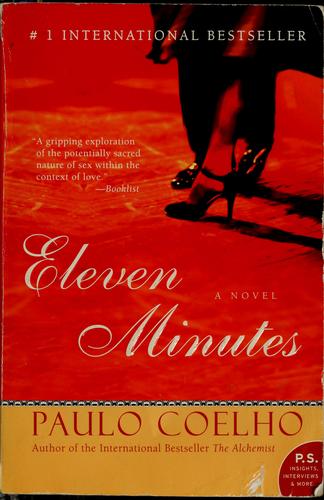
Eleven Minutes
What does a person preserve when intimacy becomes both labor and a search for transcendence?
A literary lens on sex work, migration, autonomy, desire, and the limits of turning another person's life into spiritual metaphor.
- Edition
- English translation by Margaret Jull Costa, ISBN 9780060589271. Portuguese original published in 2003.
- Reviewed
- August 26, 2026
- Sources
- 3
Lens
Eleven Minutes follows Maria from Brazil to Geneva, where aspiration, economic vulnerability, sexuality, and self-interpretation meet. The novel refuses a simple division between body and spirit. Sex can be work, performance, danger, pleasure, bargaining, solitude, and an attempt to be known.
Its value for this collection is not a formula for success. It is a challenge to collections that treat meaningful life as professional mastery. A person may gain money and control while remaining divided from desire. Another may speak of transcendence while ignoring material dependency.
The interpretive risk is substantial. Maria is written by a male novelist and cannot stand as evidence about sex workers, women, migrants, or trauma. The book can frame a question. It cannot settle the social reality it depicts.
Evidence
- Economic choice and intimate choice can become entangled without becoming identical.
- Migration can expand agency while increasing dependence on unfamiliar systems.
- A person may exercise choice inside conditions they did not choose.
- Desire cannot be reduced to technique, transaction, or moral judgment.
- Self-knowledge does not erase material risk.
Fiction can make these tensions felt because it follows interpretation from inside a character. That intimacy is also constructed. Sympathy for Maria should not become confidence that the reader understands other people’s lives.
Counter-lens
Debates about sex work often force a binary between free choice and pure victimhood. The novel contains reasons to resist that compression, but it may create another one by making an individual spiritual journey carry a broad social question.
Agency is not absence of constraint. Money, immigration status, gender, safety, clients, employers, and law shape the available choices. Constraint does not erase every decision either. A responsible reading holds both truths without using one to cancel the other.
Translation adds another layer. The English voice comes through Margaret Jull Costa’s rendering of the Portuguese text. Word choice around sex, love, labor, and spirituality may affect tone and moral distance. Any close claim should identify the language and edition.
Limits
The novel invites philosophical interpretation, but readers should notice when Maria’s suffering becomes material for someone else’s insight. Meaningful reading requires asking what remains opaque. Which experiences cannot be converted into a universal message about love?
This limit is productive. It returns dignity to the character and to real people whose lives are often narrated by outsiders.
Experiment
Select one decision in the novel. Map the visible options, material constraints, emotional meanings, and information unavailable to Maria. Then write 2 interpretations that conflict. Keep both until textual evidence justifies a narrower reading.
Reflection
- How did the translation shape the English reception?
- What do sex-worker-led sources add or contest?
- Where does the novel romanticize economic vulnerability?
- Why did major reviews disagree about its literary success?
Revision
- Evidence status: contested.
- Fiction supports interpretation, not population-level claims.
- Curated and authored by Utpal Vaishnav; no lived experience is claimed.
- Publication state: published on August 26, 2026.
Revise when stronger literary criticism or sex-worker-led scholarship changes the interpretation. Remove any generalization that treats Maria as representative evidence about sex workers, migrants, women, trauma, consent, or sexuality.
Apply to my situation
For KNOLTOK, label literary interpretation as literary interpretation. When a novel raises a social question, add independent evidence and perspectives from people represented by that question before deriving public advice. Do not convert another person’s constrained life, fictional or real, into a motivational metaphor.
Continue the inquiry
Research this book lens with AI
Research Eleven Minutes as a maintained KNOLTOK lens, not as a summary or endorsement. Reader question: What does a person preserve when intimacy becomes both labor and a search for transcendence? Current synthesis: A literary lens on sex work, migration, autonomy, desire, and the limits of turning another person's life into spiritual metaphor. Current evidence status: contested. Selected primary edition and provenance: title: "Eleven Minutes"; author: "Paulo Coelho"; publisher: "HarperCollins"; publication date: "2004-04-01"; edition note: "English translation by Margaret Jull Costa, ISBN 9780060589271. Portuguese original published in 2003."; URL: "https://openlibrary.org/isbn/9780060589271" Current Lens claim to test: Eleven Minutes follows Maria from Brazil to Geneva, where aspiration, economic vulnerability, sexuality, and self-interpretation meet. The novel refuses a simple division between body and spirit. Sex can be work, performance, danger, pleasure, bargaining, solitude, and an attempt to be known. Its value for this collection is not a formula for success. It is a challenge to collections that treat meaningful life as professional mastery. A person may gain money and control while remaining divided from desire. Another may speak of transcendence while ignoring material dependency. The interpretive risk is substantial. Maria is written by Current Counter-lens to strengthen or correct: Debates about sex work often force a binary between free choice and pure victimhood. The novel contains reasons to resist that compression, but it may create another one by making an individual spiritual journey carry a broad social question. Agency is not absence of constraint. Money, immigration status, gender, safety, clients, employers, and law shape the available choices. Constraint does not erase every decision either. A responsible reading holds both truths without using one to cancel the other. Translation adds another layer. The English voice comes through Margaret Jull Costa's rendering of the Portuguese text. Current Limits to verify: The novel invites philosophical interpretation, but readers should notice when Maria's suffering becomes material for someone else's insight. Meaningful reading requires asking what remains opaque. Which experiences cannot be converted into a universal message about love? This limit is productive. It returns dignity to the character and to real people whose lives are often narrated by outsiders. Practical move under consideration: Read one important choice twice: first as individual agency, then as action constrained by money, migration status, gender, and safety. Research these claims through literary form, authorial context, reception, and the boundary between interpretation and external fact; psychology, behavior change, construct validity, intervention evidence, and structural explanations; systems research, causal mechanisms, measurement, feedback, boundary conditions, and second-order effects; finance, survivorship, leverage, downside allocation, distribution, and institutional opportunity. Verify book-derived formulations against the selected edition and do not silently substitute another edition. Separate: what the book claims; KNOLTOK's interpretation; independent evidence; application proposals; recognition or influence; credible disagreement; and unresolved uncertainty. Treat sales, fame, anecdotes, cases, and publisher or company claims as reach or self-description, not independent proof. Do not invent quotations, page numbers, personal experience, outcomes, authorial intent, or consensus. Do not infer Utpal Vaishnav's private view beyond the text above. Start with the registered sources below, assess their interests and limitations, and then find stronger primary records, peer-reviewed research, authoritative datasets, critical scholarship, or stakeholder evidence. Do not merely repeat the registered sources: - https://openlibrary.org/isbn/9780060589271 - https://www.kirkusreviews.com/book-reviews/paulo-coelho/eleven-minutes/ - https://www.publishersweekly.com/9780060589271 Return a claim ledger with 6 to 12 material claims. For each provide: exact claim; claim class; attribution; edition or page verification status; best supporting evidence with a direct link; strongest counterevidence or alternative explanation with a direct link; confidence as high, medium, low, or unresolved; transfer conditions; affected stakeholders; possible harm if overstated; and a keep, narrow, rewrite, or remove recommendation. Then provide source-quality notes, missing perspectives, contradictions with the current lens, 3 to 5 proposed revisions, one reversible experiment with baseline and stop condition, and explicit revision or retirement triggers. Use direct links and full citations. Quote only when exact wording materially matters and has been verified.
About this lens
Primary book: Eleven Minutes by Paulo Coelho, English translation by Margaret Jull Costa, ISBN 9780060589271. Portuguese original published in 2003.
Lens author: Utpal Vaishnav. The interpretation, personal experience, and conclusions belong to the lens author.
AI assistance: AI assisted with research, structure, and drafting. No lived experience, authorial intent, or sociological claim was invented.
Human review: Utpal Vaishnav
- 2026-08-26: Prepared the K200-B03 local review lens.
- 2026-08-26: Added fiction-versus-social-evidence boundaries, consent and labor application, reflection, and revision triggers.