
Book lens / Published
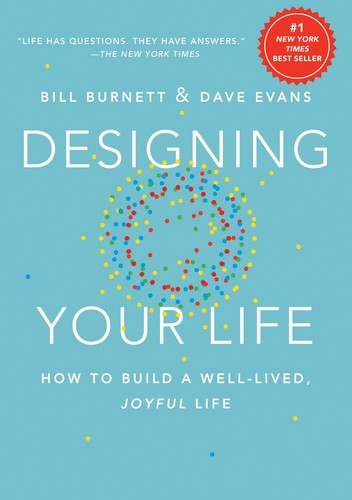
Designing Your Life
Can a life be prototyped without treating grief, duty, or structural constraint as a design problem?
A lens on generating several viable futures, testing assumptions through small encounters, and treating career direction as inquiry rather than revelation.
- Edition
- First US hardcover edition. ISBN 9781101875322.
- Reviewed
- August 26, 2026
- Sources
- 3
Lens
Small prototypes can replace abstract certainty with information. They are most honest when they expose constraints and obligations rather than implying that every life condition is freely redesignable.
A lens on generating several viable futures, testing assumptions through small encounters, and treating career direction as inquiry rather than revelation. The useful move is not to adopt a slogan. It is to distinguish the book’s proposal from the conditions under which that proposal is responsible.
Multiple futures
Generate alternatives before evaluating them.
Prototypes
Use small experiences to learn what speculation cannot settle.
Reframing
Test whether the stated problem is actionable and correctly formed.
Constraint literacy
Make money, care, health, identity, and power part of the design brief.
Counter-lens
A design frame privileges agency and iteration. Many conditions are inherited, collectively governed, or irreversible. Reframing can help someone find an actionable edge, but it can also disguise discrimination, grief, illness, debt, or care as a creativity failure. Some commitments deserve fidelity rather than continual optionality.
Evidence
The book adapts practices from design education and the authors’ Stanford course. Its #1 New York Times bestseller status and course adoption show reach and educational use, not comparative proof that the method produces better lives. Prototyping is best treated as a decision-learning practice whose value depends on what uncertainty it actually reduces.
The applications for Designing Your Life are editorial transfers directed at this question: Can a life be prototyped without treating grief, duty, or structural constraint as a design problem? They remain proposed experiments, not reported outcomes or claims that Utpal Vaishnav has used the method. Their evidence must be assessed separately from the book’s influence or the coherence of its argument.
Limits
- Educational adoption is not outcome validation.
- Prototypes can be unrepresentative of sustained work and its burdens.
- Networks, spare time, and financial buffers shape who can experiment.
- Keeping options open can become avoidance of commitment.
Apply to my situation
For each proposed future, write the attraction, the feared cost, the people affected, and the assumption most likely to be wrong. Choose the smallest ethical encounter with reality: shadowing, a conversation, a weekend project, or a budget simulation. Do not label a high-stakes leap a prototype.
Experiment
Run three probes over three weeks, one for each future. Before each, state what evidence would increase or decrease interest. Afterward, record surprise, energy, skill demand, material feasibility, and impact on obligations. Choose a next test, not a permanent identity.
Reflection
- Which constraint is fixed, negotiable, or collectively produced?
- What can a short prototype fail to reveal?
- Who bears the downside of this experiment?
- When does option generation become refusal to commit?
Revision
Revise when longitudinal evidence becomes available, when readers report that the design frame hides structural barriers, or when a prototype fails to predict sustained conditions. Preserve the distinction between exploration and proof.
Sources
- Bill Burnett and Dave Evans, Designing Your Life. Knopf, 2016. ISBN 9781101875322. Edition record.
- Stanford Life Design Lab, Designing Your Life. Stanford University.
- Bill Burnett and Dave Evans, Designing Your Life. Penguin Random House, 2016.
Continue the inquiry
Research this book lens with AI
Research Designing Your Life as a maintained KNOLTOK lens, not as a summary or endorsement. Reader question: Can a life be prototyped without treating grief, duty, or structural constraint as a design problem? Current synthesis: A lens on generating several viable futures, testing assumptions through small encounters, and treating career direction as inquiry rather than revelation. Current evidence status: mixed. Selected primary edition and provenance: title: "Designing Your Life"; author: "Bill Burnett and Dave Evans"; publisher: "Knopf"; publication date: "2016-09-20"; edition note: "First US hardcover edition. ISBN 9781101875322."; URL: "https://www.penguinrandomhouse.com/books/249885/designing-your-life-by-bill-burnett-and-dave-evans/" Current Lens claim to test: Small prototypes can replace abstract certainty with information. They are most honest when they expose constraints and obligations rather than implying that every life condition is freely redesignable. A lens on generating several viable futures, testing assumptions through small encounters, and treating career direction as inquiry rather than revelation. The useful move is not to adopt a slogan. It is to distinguish the book's proposal from the conditions under which that proposal is responsible. Multiple futures Generate alternatives before evaluating them. Prototypes Use small experiences to learn what speculation cannot settle. Reframing Test whether the Current Counter-lens to strengthen or correct: A design frame privileges agency and iteration. Many conditions are inherited, collectively governed, or irreversible. Reframing can help someone find an actionable edge, but it can also disguise discrimination, grief, illness, debt, or care as a creativity failure. Some commitments deserve fidelity rather than continual optionality. Current Limits to verify: - Educational adoption is not outcome validation. - Prototypes can be unrepresentative of sustained work and its burdens. - Networks, spare time, and financial buffers shape who can experiment. - Keeping options open can become avoidance of commitment. Practical move under consideration: Draft three meaningfully different versions of the next two years. For each, run one reversible conversation, observation, or small project before making a large commitment. Research these claims through strategy, organizational evidence, incentives, base rates, selection effects, and stakeholder outcomes; psychology, behavior change, construct validity, intervention evidence, and structural explanations; systems research, causal mechanisms, measurement, feedback, boundary conditions, and second-order effects; political economy, law, legitimacy, geography, distribution, and affected communities. Verify book-derived formulations against the selected edition and do not silently substitute another edition. Separate: what the book claims; KNOLTOK's interpretation; independent evidence; application proposals; recognition or influence; credible disagreement; and unresolved uncertainty. Treat sales, fame, anecdotes, cases, and publisher or company claims as reach or self-description, not independent proof. Do not invent quotations, page numbers, personal experience, outcomes, authorial intent, or consensus. Do not infer Utpal Vaishnav's private view beyond the text above. Start with the registered sources below, assess their interests and limitations, and then find stronger primary records, peer-reviewed research, authoritative datasets, critical scholarship, or stakeholder evidence. Do not merely repeat the registered sources: - https://www.penguinrandomhouse.com/books/249885/designing-your-life-by-bill-burnett-and-dave-evans/ - https://lifedesignlab.stanford.edu/dyl Return a claim ledger with 6 to 12 material claims. For each provide: exact claim; claim class; attribution; edition or page verification status; best supporting evidence with a direct link; strongest counterevidence or alternative explanation with a direct link; confidence as high, medium, low, or unresolved; transfer conditions; affected stakeholders; possible harm if overstated; and a keep, narrow, rewrite, or remove recommendation. Then provide source-quality notes, missing perspectives, contradictions with the current lens, 3 to 5 proposed revisions, one reversible experiment with baseline and stop condition, and explicit revision or retirement triggers. Use direct links and full citations. Quote only when exact wording materially matters and has been verified.
About this lens
Primary book: Designing Your Life by Bill Burnett and Dave Evans, First US hardcover edition. ISBN 9781101875322.
Lens author: Utpal Vaishnav. The interpretation, personal experience, and conclusions belong to the lens author.
AI assistance: AI assisted with source discovery, comparison, structure, and drafting. Utpal Vaishnav accepted the exact K200-B04 lens text for publication and remains responsible for the released synthesis. No personal experience, outcome, quotation, or page reference was invented.
Human review: Utpal Vaishnav
- 2026-08-26: Created the K200-B04 private review draft from the confirmed selection, with a full eight-section architecture and edition-specific source record.
- 2026-08-26: Accepted the exact K200-B04 lens text and prepared it for publication with the verified local cover.