
Book lens / Published
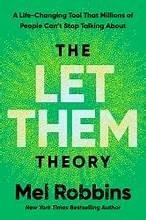
The Let Them Theory
When is letting people choose healthy acceptance, and when is it avoidance dressed as emotional freedom?
A lens on control, boundaries, responsibility, and the point where acceptance must give way to action.
- Edition
- Hardcover ISBN 9781401971366.
- Reviewed
- August 26, 2026
- Sources
- 3
Lens
Much distress comes from trying to manage another person’s preferences, attention, approval, timing, or interpretation. “Let them” can interrupt that struggle. Let a friend decline. Let a colleague reveal how they work. Let an audience misunderstand before deciding whether correction is necessary. Attention can return to one’s own choice.
The phrase is memorable because it compresses an old distinction: some things are ours to govern and others are not. Its usefulness depends on the second half. Acceptance is not passivity. Once another person has chosen, we still decide what to communicate, permit, repair, protect, or leave.
The central risk is applying a low-conflict social heuristic to situations governed by duty and power. A parent cannot simply let a child enter danger. A manager cannot let discrimination continue. A person facing coercion may need support and protection, not a lesson about detachment.
Evidence
- Other people are allowed to make ordinary choices we dislike.
- Repeated attempts to secure approval can consume attention without changing the relationship.
- Behavior is information. Allowing it to appear may clarify what decision is needed.
- Boundaries describe one’s own action, not a command that controls the other person.
- Emotional regulation can create space between an event and a response.
The practice is most useful when the stakes are bounded and the other person retains legitimate choice. It can reduce mind reading and prevent resentment created by covert expectations.
Counter-lens
“Let them” can excuse silence when a conversation is owed. It can turn shared problems into private coping. In a workplace, one person’s freedom may create costs for colleagues. In a family, care is interdependent. In public life, tolerating harmful conduct can protect the powerful rather than liberate the observer.
The word “theory” should also be handled carefully. The book is popular self-help, not a new validated psychological theory. Its bestseller history demonstrates reach. It does not establish that the method improves relationships or mental health across populations.
Attribution deserves precision. Similar formulations existed before the book in philosophy, prayer, therapy, social media, and a circulated poem. A phrase can be developed into a commercial framework without becoming an original discovery. The lens should acknowledge inheritance rather than adjudicate ownership without evidence.
Apply to my situation
Use a three-part map. “Theirs” includes their taste, opinion, invitation, and voluntary commitment. “Mine” includes my response, availability, boundary, and interpretation. “Ours” includes agreements, shared resources, mutual duties, and consequences that require negotiation.
The third category prevents independence from becoming isolation. Relationships are not only two sovereign people walking away from discomfort. They also contain promises and dependencies that must be discussed.
Experiment
Choose one low-risk conflict. Write the 3 columns before acting. Stop one attempt to control what belongs to the other person. Take one action from your own column. If a shared obligation remains, request a specific agreement instead of silently detaching.
Reflection
- Which claims align with acceptance-based therapy and which are motivational reframing?
- When does detachment help, and when does it worsen avoidance?
- How should the practice change under coercion or unequal power?
- What is the documented history of the phrase and framework?
Revision
- Evidence status: mixed.
- Popularity and testimonials do not establish therapeutic efficacy.
- Curated and authored by Utpal Vaishnav; no relationship experience is claimed.
- Publication state: published on August 26, 2026.
Revise if direct trials test the book’s formulation rather than adjacent acceptance constructs. Narrow or retire applications that enable coercion, neglect, discrimination, abuse, or avoidance of contractual and caregiving duties.
Limits
Evidence for psychological flexibility and acceptance-based therapies supports related clinical processes, not this branded theory as a complete or original intervention. A slogan cannot determine whether a situation calls for tolerance, negotiation, documentation, protection, treatment, legal advice, or exit. Acute danger and coercive control are not self-help experiments.
Continue the inquiry
Research this book lens with AI
Research The Let Them Theory as a maintained KNOLTOK lens, not as a summary or endorsement. Reader question: When is letting people choose healthy acceptance, and when is it avoidance dressed as emotional freedom? Current synthesis: A lens on control, boundaries, responsibility, and the point where acceptance must give way to action. Current evidence status: mixed. Selected primary edition and provenance: title: "The Let Them Theory"; author: "Mel Robbins and Sawyer Robbins"; publisher: "Hay House"; publication date: "2024-12-24"; edition note: "Hardcover ISBN 9781401971366."; URL: "https://www.penguinrandomhouse.com/books/743134/the-let-them-theory-by-mel-robbins/" Current Lens claim to test: Much distress comes from trying to manage another person's preferences, attention, approval, timing, or interpretation. "Let them" can interrupt that struggle. Let a friend decline. Let a colleague reveal how they work. Let an audience misunderstand before deciding whether correction is necessary. Attention can return to one's own choice. The phrase is memorable because it compresses an old distinction: some things are ours to govern and others are not. Its usefulness depends on the second half. Acceptance is not passivity. Once another person has chosen, we still decide what to communicate, permit, repair, protect, or Current Counter-lens to strengthen or correct: "Let them" can excuse silence when a conversation is owed. It can turn shared problems into private coping. In a workplace, one person's freedom may create costs for colleagues. In a family, care is interdependent. In public life, tolerating harmful conduct can protect the powerful rather than liberate the observer. The word "theory" should also be handled carefully. The book is popular self-help, not a new validated psychological theory. Its bestseller history demonstrates reach. It does not establish that the method improves relationships or mental health across populations. Attribution deserves precision. Similar formulations existed before Current Limits to verify: Evidence for psychological flexibility and acceptance-based therapies supports related clinical processes, not this branded theory as a complete or original intervention. A slogan cannot determine whether a situation calls for tolerance, negotiation, documentation, protection, treatment, legal advice, or exit. Acute danger and coercive control are not self-help experiments. Practical move under consideration: Divide one conflict into what belongs to them, what belongs to you, and what requires a shared agreement. Research these claims through strategy, organizational evidence, incentives, base rates, selection effects, and stakeholder outcomes; psychology, behavior change, construct validity, intervention evidence, and structural explanations; systems research, causal mechanisms, measurement, feedback, boundary conditions, and second-order effects; finance, survivorship, leverage, downside allocation, distribution, and institutional opportunity. Verify book-derived formulations against the selected edition and do not silently substitute another edition. Separate: what the book claims; KNOLTOK's interpretation; independent evidence; application proposals; recognition or influence; credible disagreement; and unresolved uncertainty. Treat sales, fame, anecdotes, cases, and publisher or company claims as reach or self-description, not independent proof. Do not invent quotations, page numbers, personal experience, outcomes, authorial intent, or consensus. Do not infer Utpal Vaishnav's private view beyond the text above. Start with the registered sources below, assess their interests and limitations, and then find stronger primary records, peer-reviewed research, authoritative datasets, critical scholarship, or stakeholder evidence. Do not merely repeat the registered sources: - https://www.penguinrandomhouse.com/books/743134/the-let-them-theory-by-mel-robbins/ - https://apnews.com/article/51bc053fc498ae207f63a4e0efae2f08 - https://pubmed.ncbi.nlm.nih.gov/38615492/ Return a claim ledger with 6 to 12 material claims. For each provide: exact claim; claim class; attribution; edition or page verification status; best supporting evidence with a direct link; strongest counterevidence or alternative explanation with a direct link; confidence as high, medium, low, or unresolved; transfer conditions; affected stakeholders; possible harm if overstated; and a keep, narrow, rewrite, or remove recommendation. Then provide source-quality notes, missing perspectives, contradictions with the current lens, 3 to 5 proposed revisions, one reversible experiment with baseline and stop condition, and explicit revision or retirement triggers. Use direct links and full citations. Quote only when exact wording materially matters and has been verified.
About this lens
Primary book: The Let Them Theory by Mel Robbins and Sawyer Robbins, Hardcover ISBN 9781401971366.
Lens author: Utpal Vaishnav. The interpretation, personal experience, and conclusions belong to the lens author.
AI assistance: AI assisted with research, structure, and drafting. No therapeutic outcome, personal relationship, or scientific consensus was invented.
Human review: Utpal Vaishnav
- 2026-08-26: Prepared the K200-B03 local review lens.
- 2026-08-26: Added acceptance evidence, safety boundaries, application, reflection, and revision triggers.