
Book lens / Published
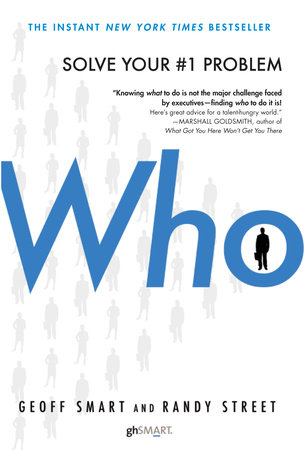
Who
Can structure reduce hiring bias without turning a person into a scorecard?
A lens on structured hiring, evidence, power, and the limits of classifying candidates as A, B, or C players.
- Edition
- ISBN 9780345504197.
- Reviewed
- August 26, 2026
- Sources
- 1
Lens
Hiring invites intuition because evidence is incomplete and the decision feels personal. Who responds with a sequence: define outcomes, build a scorecard, source deliberately, conduct structured interviews, verify through references, and persuade the chosen candidate. The appeal is understandable. A repeatable process can make assumptions visible and reduce the influence of charm, familiarity, and improvised questions.
Structure does not make a process fair by itself. A scorecard can encode the preferences of the people who wrote it. A chronological interview can reward conventional careers and penalize disability, caregiving, migration, unemployment, or work outside recognized institutions. Reference checks can reproduce exclusion because access to prestigious sponsors is uneven.
The right question is not whether hiring should be systematic. It is what the system measures, whose evidence it trusts, and whether candidates can challenge a mistaken interpretation.
Evidence
- Define the work before evaluating the person.
- Ask comparable job-relevant questions across candidates.
- Seek evidence of outcomes rather than relying on confidence or resemblance.
- Separate sourcing, assessment, and persuasion so each can be examined.
- Review hiring outcomes to learn whether the process predicts performance.
These moves improve accountability. A manager who cannot explain the evidence behind a decision is more likely to be following an impression. Consistency also allows the organization to inspect patterns after several hires.
A person is not a player grade
The language of A, B, and C players creates false permanence. Performance depends on role clarity, management, resources, team design, health, incentives, and timing. Someone who struggled in one system may thrive in another. A high performer can fail when the context changes.
The book’s precise claims about success rates and the cost of a bad hire originate in the authors’ consulting framework. They should be attributed, not treated as settled science. Independent hiring research may support narrower practices such as structured interviews and work samples without validating the whole branded method.
Power matters throughout the interview. Requests for salary history, forced reference access, or invasive career narratives can impose costs on candidates. A rigorous process should gather only information necessary for the work and provide accommodations and clear criteria.
Structure with appeal
Build the scorecard around outcomes that can be observed after hiring. Test each criterion for job relevance and possible proxy discrimination. Use more than one evidence source. Record uncertainty. Give candidates a way to correct factual misunderstanding.
After the decision, audit the system rather than congratulating the method. Who entered the funnel? Who advanced? Which predictions were accurate? Which conditions helped the hire succeed? A process becomes trustworthy through correction, not branding.
Experiment
For one role, replace unstructured conversation with the same 4 job-relevant questions and one work sample for every candidate. Score independently before discussion. Compare the evidence with the original intuitive ranking, then review the process for accessibility and adverse patterns.
Reflection
- Which parts of the method align with independent selection research?
- How should career gaps and nontraditional experience be interpreted?
- What evidence should never be requested because the privacy cost is too high?
- How can candidates appeal or contextualize a score?
Revision
- Evidence status: mixed.
- Bestseller recognition shows reach, not the validity of proprietary success claims.
- Curated and authored by Utpal Vaishnav; no personal hiring experience is claimed.
- Publication state: published on August 26, 2026.
Counter-lens
For Who, test the strongest answer to the same reader question: Can structure reduce hiring bias without turning a person into a scorecard? Ask whether context, selection, incentives, prior capability, power, or survivorship explains the result better than the book’s favored mechanism. Disagreement is evidence to examine, not proof that the reader failed to understand the author.
Limits
The transfer boundary for Who is built into its question: Can structure reduce hiring bias without turning a person into a scorecard? Do not generalize from a memorable example or retrospective success. Test domain, timing, resources, incentives, power, consent, and who bears the downside.
Apply to my situation
For KNOLTOK, treat Who as a proposed decision aid rather than a personal claim. Its book-specific move is: Replace one vague hiring preference with an observable outcome, a job-relevant question, and a consistent scoring rule used for every candidate. For this application, record why ‘Replace one vague hiring preference with an observable outcome, a job-relevant question, and a consistent scoring rule used for every candidate’ fits the current case, which source supports it, who is affected, and what evidence would block transfer.
Continue the inquiry
Research this book lens with AI
Research Who as a maintained KNOLTOK lens, not as a summary or endorsement. Reader question: Can structure reduce hiring bias without turning a person into a scorecard? Current synthesis: A lens on structured hiring, evidence, power, and the limits of classifying candidates as A, B, or C players. Current evidence status: mixed. Selected primary edition and provenance: title: "Who: The A Method for Hiring"; author: "Geoff Smart and Randy Street"; publisher: "Crown Business"; publication date: "2008-09-30"; edition note: "ISBN 9780345504197."; URL: "https://www.penguinrandomhouse.com/books/168637/who-by-geoff-smart-and-randy-street/" Current Lens claim to test: Hiring invites intuition because evidence is incomplete and the decision feels personal. Who responds with a sequence: define outcomes, build a scorecard, source deliberately, conduct structured interviews, verify through references, and persuade the chosen candidate. The appeal is understandable. A repeatable process can make assumptions visible and reduce the influence of charm, familiarity, and improvised questions. Structure does not make a process fair by itself. A scorecard can encode the preferences of the people who wrote it. A chronological interview can reward conventional careers and penalize disability, caregiving, migration, unemployment, or work outside recognized institutions. Current Counter-lens to strengthen or correct: For Who, test the strongest answer to the same reader question: Can structure reduce hiring bias without turning a person into a scorecard? Ask whether context, selection, incentives, prior capability, power, or survivorship explains the result better than the book's favored mechanism. Disagreement is evidence to examine, not proof that the reader failed to understand the author. Current Limits to verify: The transfer boundary for Who is built into its question: Can structure reduce hiring bias without turning a person into a scorecard? Do not generalize from a memorable example or retrospective success. Test domain, timing, resources, incentives, power, consent, and who bears the downside. Practical move under consideration: Replace one vague hiring preference with an observable outcome, a job-relevant question, and a consistent scoring rule used for every candidate. Research these claims through strategy, organizational evidence, incentives, base rates, selection effects, and stakeholder outcomes; systems research, causal mechanisms, measurement, feedback, boundary conditions, and second-order effects; organizational behavior, power, worker experience, governance, law, and accountable dissent; political economy, law, legitimacy, geography, distribution, and affected communities. Verify book-derived formulations against the selected edition and do not silently substitute another edition. Separate: what the book claims; KNOLTOK's interpretation; independent evidence; application proposals; recognition or influence; credible disagreement; and unresolved uncertainty. Treat sales, fame, anecdotes, cases, and publisher or company claims as reach or self-description, not independent proof. Do not invent quotations, page numbers, personal experience, outcomes, authorial intent, or consensus. Do not infer Utpal Vaishnav's private view beyond the text above. Start with the registered sources below, assess their interests and limitations, and then find stronger primary records, peer-reviewed research, authoritative datasets, critical scholarship, or stakeholder evidence. Do not merely repeat the registered sources: - https://www.penguinrandomhouse.com/books/168637/who-by-geoff-smart-and-randy-street/ Return a claim ledger with 6 to 12 material claims. For each provide: exact claim; claim class; attribution; edition or page verification status; best supporting evidence with a direct link; strongest counterevidence or alternative explanation with a direct link; confidence as high, medium, low, or unresolved; transfer conditions; affected stakeholders; possible harm if overstated; and a keep, narrow, rewrite, or remove recommendation. Then provide source-quality notes, missing perspectives, contradictions with the current lens, 3 to 5 proposed revisions, one reversible experiment with baseline and stop condition, and explicit revision or retirement triggers. Use direct links and full citations. Quote only when exact wording materially matters and has been verified.
About this lens
Primary book: Who by Geoff Smart and Randy Street, ISBN 9780345504197.
Lens author: Utpal Vaishnav. The interpretation, personal experience, and conclusions belong to the lens author.
AI assistance: AI assisted with research, structure, and drafting. No hiring outcome, research result, or personal management experience was invented.
Human review: Utpal Vaishnav
- 2026-08-26: Prepared the K200-B03 local review lens.