
Book lens / Published
Goals!
When do explicit goals create direction, and when do they make us optimize the wrong life?
A lens on written goals, feedback, identity, measurement, and the second-order costs of focused pursuit.
- Edition
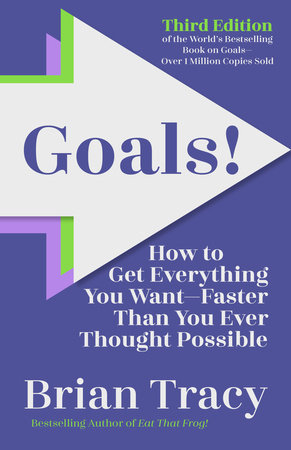
- Third edition, ISBN 9798890570437. Publisher reports almost one million copies across editions.
- Reviewed
- August 26, 2026
- Sources
- 1
Lens
A goal can turn an aspiration into a decision. Naming an outcome changes what can be planned, measured, declined, and reviewed. The book offers a systematic practice of writing goals, choosing priorities, identifying obstacles, and taking repeated action.
The danger is that clarity about a target can be mistaken for clarity about a life. A measurable outcome may crowd out purposes that are harder to count. The person can become exceptionally effective at reaching a destination that no longer deserves the cost.
The lens should therefore treat goals as instruments. They coordinate attention under uncertainty. They are not promises to a future identity and should not become moral verdicts on the person who revises them.
Evidence
- Writing an aim exposes vagueness and conflict.
- A next action is more useful than repeated visualization alone.
- Obstacles and required capabilities should be named before commitment.
- Progress needs feedback rather than motivational intensity.
- Priorities require choosing what will not be pursued.
These practices can improve execution because they reduce ambiguity. Their value depends on the quality of the aim and the surrounding system.
When the measure takes over
Targets change behavior. A sales quota may increase attention to customers or encourage mis-selling. A publication count may support research or fragment it. A fitness number may guide training or consume health. Once a measure becomes a target, people learn to satisfy the measure, sometimes at the expense of the purpose.
Goals can also narrow perception. Unexpected information that threatens commitment is discounted. Sunk costs are reframed as perseverance. Relationships and rest become obstacles because their value does not fit the scorecard.
Structural conditions remain relevant. Two people can use the same method while facing different safety, time, care duties, capital, discrimination, and health. A missed target does not identify the cause. The method should produce inquiry, not blame.
Goals also interact. A professional target can consume the attention needed for health, care, learning, or friendship. Evaluating each goal separately misses the portfolio effect. The relevant question is whether the set of commitments can coexist inside the same finite week.
Add purpose and guardrails
Every major goal needs a statement of purpose and constraints. Why does this outcome matter? What must not be damaged in its pursuit? Which signal would require a pause? When will the goal be reviewed rather than automatically renewed?
This changes quitting from failure into governance. Persistence remains valuable when evidence supports the direction. Stopping becomes responsible when the target no longer serves the purpose.
Experiment
Choose one current goal. Write its purpose, metric, next action, and 2 guardrails. Add one disconfirming signal and a review date. For 2 weeks, record both progress and cost. Continue only if the measure still represents the purpose.
Reflection
- Which goal-setting findings replicate across tasks and populations?
- When do learning goals outperform performance goals?
- How do targets affect ethics, risk, and intrinsic motivation?
- Which claims changed between the 2003 and 2024 editions?
Revision
- Evidence status: mixed.
- Sales claims are publisher-attributed and span multiple editions.
- Curated and authored by Utpal Vaishnav; no personal achievement is claimed.
- Publication state: published on August 26, 2026.
Counter-lens
For Goals!, test the strongest answer to the same reader question: When do explicit goals create direction, and when do they make us optimize the wrong life? Ask whether context, selection, incentives, prior capability, power, or survivorship explains the result better than the book’s favored mechanism. Disagreement is evidence to examine, not proof that the reader failed to understand the author.
Limits
The transfer boundary for Goals! is built into its question: When do explicit goals create direction, and when do they make us optimize the wrong life? Do not generalize from a memorable example or retrospective success. Test domain, timing, resources, incentives, power, consent, and who bears the downside.
Apply to my situation
For KNOLTOK, treat Goals! as a proposed decision aid rather than a personal claim. Its book-specific move is: Rewrite one goal with a purpose, a measure, 2 guardrails, and a date when continuation must be reconsidered. For this application, record why ‘Rewrite one goal with a purpose, a measure, 2 guardrails, and a date when continuation must be reconsidered’ fits the current case, which source supports it, who is affected, and what evidence would block transfer.
Continue the inquiry
Research this book lens with AI
Research Goals! as a maintained KNOLTOK lens, not as a summary or endorsement. Reader question: When do explicit goals create direction, and when do they make us optimize the wrong life? Current synthesis: A lens on written goals, feedback, identity, measurement, and the second-order costs of focused pursuit. Current evidence status: mixed. Selected primary edition and provenance: title: "Goals! Third Edition"; author: "Brian Tracy"; publisher: "Berrett-Koehler Publishers"; publication date: "2024-12-03"; edition note: "Third edition, ISBN 9798890570437. Publisher reports almost one million copies across editions."; URL: "https://www.penguinrandomhouse.com/books/770102/goals-third-edition-by-brian-tracy/" Current Lens claim to test: A goal can turn an aspiration into a decision. Naming an outcome changes what can be planned, measured, declined, and reviewed. The book offers a systematic practice of writing goals, choosing priorities, identifying obstacles, and taking repeated action. The danger is that clarity about a target can be mistaken for clarity about a life. A measurable outcome may crowd out purposes that are harder to count. The person can become exceptionally effective at reaching a destination that no longer deserves the cost. The lens should therefore treat goals as instruments. They coordinate attention under uncertainty. Current Counter-lens to strengthen or correct: For Goals!, test the strongest answer to the same reader question: When do explicit goals create direction, and when do they make us optimize the wrong life? Ask whether context, selection, incentives, prior capability, power, or survivorship explains the result better than the book's favored mechanism. Disagreement is evidence to examine, not proof that the reader failed to understand the author. Current Limits to verify: The transfer boundary for Goals! is built into its question: When do explicit goals create direction, and when do they make us optimize the wrong life? Do not generalize from a memorable example or retrospective success. Test domain, timing, resources, incentives, power, consent, and who bears the downside. Practical move under consideration: Rewrite one goal with a purpose, a measure, 2 guardrails, and a date when continuation must be reconsidered. Research these claims through strategy, organizational evidence, incentives, base rates, selection effects, and stakeholder outcomes; psychology, behavior change, construct validity, intervention evidence, and structural explanations; systems research, causal mechanisms, measurement, feedback, boundary conditions, and second-order effects; finance, survivorship, leverage, downside allocation, distribution, and institutional opportunity. Verify book-derived formulations against the selected edition and do not silently substitute another edition. Separate: what the book claims; KNOLTOK's interpretation; independent evidence; application proposals; recognition or influence; credible disagreement; and unresolved uncertainty. Treat sales, fame, anecdotes, cases, and publisher or company claims as reach or self-description, not independent proof. Do not invent quotations, page numbers, personal experience, outcomes, authorial intent, or consensus. Do not infer Utpal Vaishnav's private view beyond the text above. Start with the registered sources below, assess their interests and limitations, and then find stronger primary records, peer-reviewed research, authoritative datasets, critical scholarship, or stakeholder evidence. Do not merely repeat the registered sources: - https://www.penguinrandomhouse.com/books/770102/goals-third-edition-by-brian-tracy/ Return a claim ledger with 6 to 12 material claims. For each provide: exact claim; claim class; attribution; edition or page verification status; best supporting evidence with a direct link; strongest counterevidence or alternative explanation with a direct link; confidence as high, medium, low, or unresolved; transfer conditions; affected stakeholders; possible harm if overstated; and a keep, narrow, rewrite, or remove recommendation. Then provide source-quality notes, missing perspectives, contradictions with the current lens, 3 to 5 proposed revisions, one reversible experiment with baseline and stop condition, and explicit revision or retirement triggers. Use direct links and full citations. Quote only when exact wording materially matters and has been verified.
About this lens
Primary book: Goals! by Brian Tracy, Third edition, ISBN 9798890570437. Publisher reports almost one million copies across editions.
Lens author: Utpal Vaishnav. The interpretation, personal experience, and conclusions belong to the lens author.
AI assistance: AI assisted with research, structure, and drafting. No goal-setting outcome, study result, or personal achievement was invented.
Human review: Utpal Vaishnav
- 2026-08-26: Prepared the K200-B03 local review lens.
- 2026-08-26: Verified the third-edition cover against the publisher ISBN endpoint.