
Book lens / Published
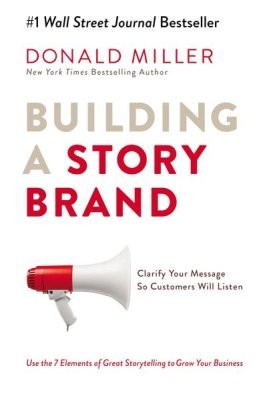
Building a StoryBrand
Does making the customer the hero create clarity, or flatten every human relationship into a conversion story?
A lens on narrative clarity, customer empathy, persuasion, and the ethical limits of formulaic marketing.
- Edition
- Original edition, ISBN 9780718033323.
- Reviewed
- August 26, 2026
- Sources
- 2
Lens
Organizations often describe themselves when customers need to understand a decision. Building a StoryBrand offers a correction: make the customer the central actor, define the problem, clarify the guide’s role, provide a plan, and state the next step.
This can improve communication because it reduces internal language and makes the user’s task visible. A customer does not need the organization’s autobiography before learning whether the product is relevant, safe, affordable, and credible.
The framework becomes dangerous when every human need is forced into a conversion arc. A customer is not a character created for the company’s story. The company does not know the person’s inner conflict merely because a marketing template asks for one.
Evidence
- Lead with the decision the audience is trying to make.
- State the problem in language the audience can recognize.
- Clarify the next step and its cost.
- Make the organization’s role proportionate to the evidence.
- Remove internal detail that does not help the reader act.
These disciplines serve orientation. They are especially useful when expertise has made an organization forget what a newcomer does not know.
Narrative can clarify or manipulate
A story selects causes, stakes, heroes, and endings. That selection can make complexity usable, but it can also manufacture urgency and certainty. Marketing may intensify a fear, present the company as the inevitable guide, and describe purchase as transformation.
The customer-as-hero language sounds respectful while preserving the seller’s control over the script. Real customers have competing aims, may rationally decline, and may use the product in ways the marketer did not imagine. Respect requires meaningful choice, not only a flattering role.
StoryBrand is also a commercial ecosystem of books, workshops, certification, software, and consulting. Its reported reach demonstrates adoption. It does not independently prove improved outcomes or customer welfare.
The framework may work differently across contexts. A low-risk consumer purchase can tolerate compression that would be irresponsible in medicine, finance, education, or public service. The higher the consequence, the more the message must preserve uncertainty and comparison.
Clarity needs an evidence boundary
For every narrative claim, ask what is observed. Is the problem documented? Can the product deliver the proposed result? What conditions affect success? What happens if the customer does nothing or chooses an alternative?
A clear message should make comparison easier. If clarity depends on hiding limitations, compressing risk, or reducing alternatives, it has become persuasion against informed judgment.
Experiment
Rewrite one landing-page paragraph using the framework. Then conduct an evidence pass. Mark every promise, emotional inference, and causal link. Remove or qualify anything unsupported. Add one meaningful limitation and one alternative. Test whether the message remains understandable without manufactured stakes.
Reflection
- Which parts of narrative structure improve comprehension?
- When does fluency create unwarranted confidence?
- How should regulated, medical, financial, or high-risk products alter the framework?
- What independent evidence tests StoryBrand against simpler editing?
Revision
- Evidence status: practice-informed.
- The selected text is the 2017 edition, not version 2.0.
- Curated and authored by Utpal Vaishnav; no conversion outcome is claimed.
- Publication state: published on August 26, 2026.
Counter-lens
For Building a StoryBrand, test the strongest answer to the same reader question: Does making the customer the hero create clarity, or flatten every human relationship into a conversion story? Ask whether context, selection, incentives, prior capability, power, or survivorship explains the result better than the book’s favored mechanism. Disagreement is evidence to examine, not proof that the reader failed to understand the author.
Limits
The transfer boundary for Building a StoryBrand is built into its question: Does making the customer the hero create clarity, or flatten every human relationship into a conversion story? Do not generalize from a memorable example or retrospective success. Test domain, timing, resources, incentives, power, consent, and who bears the downside.
Apply to my situation
For KNOLTOK, treat Building a StoryBrand as a proposed decision aid rather than a personal claim. Its book-specific move is: Rewrite one message with the customer as decision-maker, then remove every claim that lacks evidence or narrows the customer’s real choices. For this application, record why ‘Rewrite one message with the customer as decision-maker, then remove every claim that lacks evidence or narrows the customer’s real choices’ fits the current case, which source supports it, who is affected, and what evidence would block transfer.
Continue the inquiry
Research this book lens with AI
Research Building a StoryBrand as a maintained KNOLTOK lens, not as a summary or endorsement. Reader question: Does making the customer the hero create clarity, or flatten every human relationship into a conversion story? Current synthesis: A lens on narrative clarity, customer empathy, persuasion, and the ethical limits of formulaic marketing. Current evidence status: practice-informed. Selected primary edition and provenance: title: "Building a StoryBrand: Clarify Your Message So Customers Will Listen"; author: "Donald Miller"; publisher: "Thomas Nelson"; publication date: "2017-10-10"; edition note: "Original edition, ISBN 9780718033323."; URL: "https://openlibrary.org/isbn/9780718033323" Current Lens claim to test: Organizations often describe themselves when customers need to understand a decision. Building a StoryBrand offers a correction: make the customer the central actor, define the problem, clarify the guide's role, provide a plan, and state the next step. This can improve communication because it reduces internal language and makes the user's task visible. A customer does not need the organization's autobiography before learning whether the product is relevant, safe, affordable, and credible. The framework becomes dangerous when every human need is forced into a conversion arc. A customer is not a character created for the Current Counter-lens to strengthen or correct: For Building a StoryBrand, test the strongest answer to the same reader question: Does making the customer the hero create clarity, or flatten every human relationship into a conversion story? Ask whether context, selection, incentives, prior capability, power, or survivorship explains the result better than the book's favored mechanism. Disagreement is evidence to examine, not proof that the reader failed to understand the author. Current Limits to verify: The transfer boundary for Building a StoryBrand is built into its question: Does making the customer the hero create clarity, or flatten every human relationship into a conversion story? Do not generalize from a memorable example or retrospective success. Test domain, timing, resources, incentives, power, consent, and who bears the downside. Practical move under consideration: Rewrite one message with the customer as decision-maker, then remove every claim that lacks evidence or narrows the customer's real choices. Research these claims through literary form, authorial context, reception, and the boundary between interpretation and external fact; strategy, organizational evidence, incentives, base rates, selection effects, and stakeholder outcomes; psychology, behavior change, construct validity, intervention evidence, and structural explanations; systems research, causal mechanisms, measurement, feedback, boundary conditions, and second-order effects. Verify book-derived formulations against the selected edition and do not silently substitute another edition. Separate: what the book claims; KNOLTOK's interpretation; independent evidence; application proposals; recognition or influence; credible disagreement; and unresolved uncertainty. Treat sales, fame, anecdotes, cases, and publisher or company claims as reach or self-description, not independent proof. Do not invent quotations, page numbers, personal experience, outcomes, authorial intent, or consensus. Do not infer Utpal Vaishnav's private view beyond the text above. Start with the registered sources below, assess their interests and limitations, and then find stronger primary records, peer-reviewed research, authoritative datasets, critical scholarship, or stakeholder evidence. Do not merely repeat the registered sources: - https://openlibrary.org/isbn/9780718033323 - https://storybrand.com/building-a-storybrand-book-new/ Return a claim ledger with 6 to 12 material claims. For each provide: exact claim; claim class; attribution; edition or page verification status; best supporting evidence with a direct link; strongest counterevidence or alternative explanation with a direct link; confidence as high, medium, low, or unresolved; transfer conditions; affected stakeholders; possible harm if overstated; and a keep, narrow, rewrite, or remove recommendation. Then provide source-quality notes, missing perspectives, contradictions with the current lens, 3 to 5 proposed revisions, one reversible experiment with baseline and stop condition, and explicit revision or retirement triggers. Use direct links and full citations. Quote only when exact wording materially matters and has been verified.
About this lens
Primary book: Building a StoryBrand by Donald Miller, Original edition, ISBN 9780718033323.
Lens author: Utpal Vaishnav. The interpretation, personal experience, and conclusions belong to the lens author.
AI assistance: AI assisted with research, structure, and drafting. No conversion result, customer response, or organizational adoption was invented.
Human review: Utpal Vaishnav
- 2026-08-26: Prepared the K200-B03 local review lens using the 2017 original edition.