
Book lens / Published
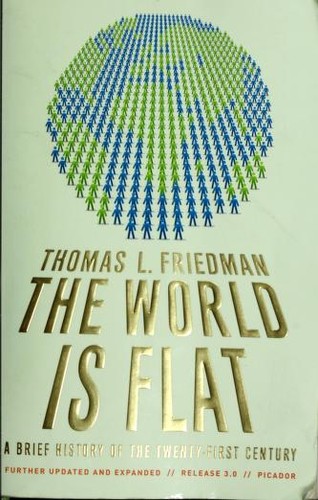
The World Is Flat
Did globalization flatten opportunity, or redistribute power while hiding new dependencies?
A historical lens on globalization, technology, labor, interdependence, and the limits of a powerful metaphor.
- Edition
- ISBN 9780312425074.
- Reviewed
- August 25, 2026
- Sources
- 3
Lens
The flat-world metaphor gave readers a memorable way to see falling coordination costs, global supply chains, digital work, and new competition. Its influence makes it worth revisiting. The same metaphor can hide hierarchy. Connectivity does not equal bargaining power, and access to a network does not determine who owns infrastructure, standards, capital, or customer relationships. Read now, the book becomes a study in how a compelling model can reveal a transition and still understate the unequal system produced by it.
Evidence
- Technology changes which work can be coordinated across distance.
- Supply chains join individual opportunity to institutional dependency.
- Global competition can expand participation while concentrating control.
- A model should be revisited when geopolitics, platforms, climate, or security changes its assumptions.
Apply to my situation
For KNOLTOK, use The World Is Flat to examine this exact question: Did globalization flatten opportunity, or redistribute power while hiding new dependencies? Begin with the proposed move, ‘Revisit one flattening claim using current evidence on ownership, labor, logistics, regulation, and geopolitical concentration’. State the mechanism, transfer conditions, affected people, contrary evidence, and the observation that would change the decision. This is an application proposal, not a claim that Utpal Vaishnav has used it or obtained a particular result.
Counter-lens
The examples and forecasts are strongly dated. Later financial crises, platform concentration, trade conflict, pandemic disruption, war, and industrial policy complicate the original account. The 3.0 edition is itself an update, so quotations and claims must stay tied to that edition. The Financial Times and Goldman Sachs award demonstrates contemporary recognition, not continuing validity. The lens must include labor, inequality, environmental cost, and countries not centered in the narrative.
Experiment
Take one product or service described as global. Map its ownership, critical suppliers, labor, data, standards, and points of political interruption. Decide whether the system is flat, layered, or concentrated.
Record the initial assumption, the intervention, the observation, and the next adjustment. Do not convert one result into a general law or a personal identity claim.
Reflection
- Which claims about The World Is Flat belong to the selected edition, and which are later interpretation?
- What independent evidence would change the answer to this question: Did globalization flatten opportunity, or redistribute power while hiding new dependencies?
- Who benefits from the proposed move, who carries its downside, and who can appeal?
- Which domain, timing, cultural, institutional, or historical conditions limit transfer?
- What finding would require narrowing or retiring this lens?
Revision
- Evidence status: contested.
- Curated and authored by Utpal Vaishnav; no personal reading or application is claimed.
- Publication state: K200-B02 exact text accepted by Utpal Vaishnav.
Revise using current measures of trade, capital, data, migration, ownership, and supply-chain concentration. Retire any “flatness” claim that mistakes technical reach for equal access or bargaining power.
Limits
The selected edition is a historical artifact of the early twenty-first-century globalization debate. Connectivity varies by flow, industry, geography, law, and period. A task can move across borders while ownership, standards, finance, intellectual property, and platform control remain concentrated. Efficiency evidence does not settle resilience, labor, security, or distributional questions.
Continue the inquiry
Research this book lens with AI
Research The World Is Flat as a maintained KNOLTOK lens, not as a summary or endorsement. Reader question: Did globalization flatten opportunity, or redistribute power while hiding new dependencies? Current synthesis: A historical lens on globalization, technology, labor, interdependence, and the limits of a powerful metaphor. Current evidence status: contested. Selected primary edition and provenance: title: "The World Is Flat"; author: "Thomas L. Friedman"; publisher: "Picador"; publication date: "2007-08-07"; edition note: "ISBN 9780312425074."; URL: "https://us.macmillan.com/books/9780312425074/theworldisflat30/" Current Lens claim to test: The flat-world metaphor gave readers a memorable way to see falling coordination costs, global supply chains, digital work, and new competition. Its influence makes it worth revisiting. The same metaphor can hide hierarchy. Connectivity does not equal bargaining power, and access to a network does not determine who owns infrastructure, standards, capital, or customer relationships. Read now, the book becomes a study in how a compelling model can reveal a transition and still understate the unequal system produced by it. Current Counter-lens to strengthen or correct: The examples and forecasts are strongly dated. Later financial crises, platform concentration, trade conflict, pandemic disruption, war, and industrial policy complicate the original account. The 3.0 edition is itself an update, so quotations and claims must stay tied to that edition. The Financial Times and Goldman Sachs award demonstrates contemporary recognition, not continuing validity. The lens must include labor, inequality, environmental cost, and countries not centered in the narrative. Current Limits to verify: The selected edition is a historical artifact of the early twenty-first-century globalization debate. Connectivity varies by flow, industry, geography, law, and period. A task can move across borders while ownership, standards, finance, intellectual property, and platform control remain concentrated. Efficiency evidence does not settle resilience, labor, security, or distributional questions. Practical move under consideration: Revisit one flattening claim using current evidence on ownership, labor, logistics, regulation, and geopolitical concentration. Research these claims through systems research, causal mechanisms, measurement, feedback, boundary conditions, and second-order effects; finance, survivorship, leverage, downside allocation, distribution, and institutional opportunity; political economy, law, legitimacy, geography, distribution, and affected communities; power, consent, reciprocity, unequal alternatives, privacy, and relationship-specific evidence. Verify book-derived formulations against the selected edition and do not silently substitute another edition. Separate: what the book claims; KNOLTOK's interpretation; independent evidence; application proposals; recognition or influence; credible disagreement; and unresolved uncertainty. Treat sales, fame, anecdotes, cases, and publisher or company claims as reach or self-description, not independent proof. Do not invent quotations, page numbers, personal experience, outcomes, authorial intent, or consensus. Do not infer Utpal Vaishnav's private view beyond the text above. Start with the registered sources below, assess their interests and limitations, and then find stronger primary records, peer-reviewed research, authoritative datasets, critical scholarship, or stakeholder evidence. Do not merely repeat the registered sources: - https://us.macmillan.com/books/9780312425074/theworldisflat30/ - https://www.aeaweb.org/articles?id=10.1257%2Fjel.45.1.83 - https://doi.org/10.48558/NTAS-J241 Return a claim ledger with 6 to 12 material claims. For each provide: exact claim; claim class; attribution; edition or page verification status; best supporting evidence with a direct link; strongest counterevidence or alternative explanation with a direct link; confidence as high, medium, low, or unresolved; transfer conditions; affected stakeholders; possible harm if overstated; and a keep, narrow, rewrite, or remove recommendation. Then provide source-quality notes, missing perspectives, contradictions with the current lens, 3 to 5 proposed revisions, one reversible experiment with baseline and stop condition, and explicit revision or retirement triggers. Use direct links and full citations. Quote only when exact wording materially matters and has been verified.
About this lens
Primary book: The World Is Flat by Thomas L. Friedman, ISBN 9780312425074.
Lens author: Utpal Vaishnav. The interpretation, personal experience, and conclusions belong to the lens author.
AI assistance: AI assisted with research, structure, and drafting. Utpal Vaishnav accepted the exact text for publication. No personal experience was invented.
Human review: Utpal Vaishnav
- 2026-08-25: Prepared the K200-B02 local review lens.
- 2026-08-25: Published after Utpal Vaishnav confirmed K200-B02 exact text.
- 2026-08-26: Added semi-globalization evidence, dependency and resilience boundaries, application, and revision triggers.