
Book lens / Published
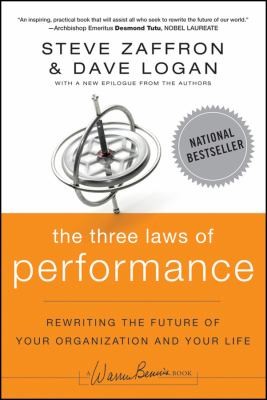
The Three Laws of Performance
How can changing the language through which people understand a situation change the actions that become possible?
A curated lens on Steve Zaffron and Dave Logan's three laws of performance: experienced reality, language, and future-based language.
- Edition
- Paperback. 256 pages. ISBN 9781118043127.
- Reviewed
- August 24, 2026
- Sources
- 2
Lens
People do not respond only to observable facts. They also respond to how the situation occurs to them.
Zaffron and Logan place language at the center of that occurrence. The language available to a person or group shapes what can be noticed, explained, promised, and attempted. A change in language can therefore create a change in coordinated action.
Evidence
Performance follows how a situation occurs
The same facts can occur as an opportunity, a threat, an injustice, or an impossible burden. Each interpretation makes some actions feel natural and others unavailable.
The practical move is to surface the interpretation instead of treating it as the situation itself.
How a situation occurs arises in language
Descriptions, stories, labels, and inherited assumptions organize experience. Language does more than report what happened. It can preserve a way of seeing that keeps producing the same response.
Listening for repeated phrases can reveal the structure beneath a recurring performance problem.
Future-based language can transform occurrence
A compelling future is not merely a prediction based on the past. It can be articulated as a possibility that organizes commitment and action in the present.
The distinction matters: optimism hopes for improvement, while a declared future asks people to make promises and coordinate behavior that could bring it into being.
Apply to my situation
This lens is useful when a team is trapped in a self-confirming account such as “nothing can change,” “they never listen,” or “this is how the industry works.”
A practical inquiry is to ask:
- How does the current situation occur to the people involved?
- What language keeps that occurrence in place?
- Which facts support or challenge the prevailing account?
- What future, if articulated responsibly, would make different commitments possible now?
Counter-lens
Language shapes interpretation and coordination, but it does not erase material conditions. Capital, law, incentives, power, health, technology, and history can constrain what is possible.
Future-based language can become manipulation when leaders demand belief without sharing evidence, authority, or risk. A declaration should open responsible action, not suppress dissent or transfer accountability.
The safest use of this lens holds language and reality together. Change the account, test the resulting actions, and remain willing to revise both.
Limits
Independent sensemaking research supports the narrower proposition that language and framing affect what organizational actors notice and how they interpret change. It does not validate every formulation in the book or prove that declaring a future causes the promised performance.
Language is distributed unequally. A leader can name the future, control the meeting, and punish dissent. Employees may appear committed because disagreement is costly. Application therefore needs material authority, resources, incentives, and protected channels for contrary evidence.
Experiment
Select one recurring performance problem. Record the current facts, dominant explanation, missing accounts, and one alternative future statement. Convert that statement into one specific promise, owner, date, and observable result. Run it for 2 weeks without changing rewards or suppressing objections. Compare action and outcome with the baseline.
Reflection
- Did the new language reveal an option or merely rename the problem?
- Who gained and lost authority when the future was declared?
- Which constraints remained unchanged?
- Could a dissenter correct the narrative without penalty?
- What result would show that the frame was wrong?
Revision
Strengthen this lens if well-designed field evidence isolates language-driven changes in coordination. Narrow it when outcomes are better explained by authority, incentives, staffing, or selection. Retire any application that uses future language to deny documented harm or compel belief.
Sources
- Steve Zaffron and Dave Logan, The Three Laws of Performance: Rewriting the Future of Your Organization and Your Life. Jossey-Bass, 2011. Paperback, 256 pages, ISBN 9781118043127. Wiley edition record.
Lens notes
This is a curated knowledge lens, not a claim that its applications happened to the lens author. Curated and authored by Utpal Vaishnav.
Continue the inquiry
Research this book lens with AI
Research The Three Laws of Performance as a maintained KNOLTOK lens, not as a summary or endorsement. Reader question: How can changing the language through which people understand a situation change the actions that become possible? Current synthesis: A curated lens on Steve Zaffron and Dave Logan's three laws of performance: experienced reality, language, and future-based language. Current evidence status: not stated. Selected primary edition and provenance: title: "The Three Laws of Performance: Rewriting the Future of Your Organization and Your Life"; author: "Steve Zaffron and Dave Logan"; publisher: "Jossey-Bass, an imprint of John Wiley & Sons"; publication date: "2011-09-01"; edition note: "Paperback. 256 pages. ISBN 9781118043127."; URL: "https://www.wiley.com/en-us/The+Three+Laws+of+Performance%3A+Rewriting+the+Future+of+Your+Organization+and+Your+Life-p-9781118043127" Current Lens claim to test: People do not respond only to observable facts. They also respond to how the situation occurs to them. Zaffron and Logan place language at the center of that occurrence. The language available to a person or group shapes what can be noticed, explained, promised, and attempted. A change in language can therefore create a change in coordinated action. Current Counter-lens to strengthen or correct: Language shapes interpretation and coordination, but it does not erase material conditions. Capital, law, incentives, power, health, technology, and history can constrain what is possible. Future-based language can become manipulation when leaders demand belief without sharing evidence, authority, or risk. A declaration should open responsible action, not suppress dissent or transfer accountability. The safest use of this lens holds language and reality together. Change the account, test the resulting actions, and remain willing to revise both. Current Limits to verify: Independent sensemaking research supports the narrower proposition that language and framing affect what organizational actors notice and how they interpret change. It does not validate every formulation in the book or prove that declaring a future causes the promised performance. Language is distributed unequally. A leader can name the future, control the meeting, and punish dissent. Employees may appear committed because disagreement is costly. Application therefore needs material authority, resources, incentives, and protected channels for contrary evidence. Practical move under consideration: Run one reversible test and preserve contrary evidence. Research these claims through psychology, behavior change, construct validity, intervention evidence, and structural explanations; systems research, causal mechanisms, measurement, feedback, boundary conditions, and second-order effects; organizational behavior, power, worker experience, governance, law, and accountable dissent; finance, survivorship, leverage, downside allocation, distribution, and institutional opportunity. Verify book-derived formulations against the selected edition and do not silently substitute another edition. Separate: what the book claims; KNOLTOK's interpretation; independent evidence; application proposals; recognition or influence; credible disagreement; and unresolved uncertainty. Treat sales, fame, anecdotes, cases, and publisher or company claims as reach or self-description, not independent proof. Do not invent quotations, page numbers, personal experience, outcomes, authorial intent, or consensus. Do not infer Utpal Vaishnav's private view beyond the text above. Start with the registered sources below, assess their interests and limitations, and then find stronger primary records, peer-reviewed research, authoritative datasets, critical scholarship, or stakeholder evidence. Do not merely repeat the registered sources: - https://www.wiley.com/en-us/The+Three+Laws+of+Performance%3A+Rewriting+the+Future+of+Your+Organization+and+Your+Life-p-9781118043127 - https://journals.sagepub.com/doi/10.1177/01492063221147295 Return a claim ledger with 6 to 12 material claims. For each provide: exact claim; claim class; attribution; edition or page verification status; best supporting evidence with a direct link; strongest counterevidence or alternative explanation with a direct link; confidence as high, medium, low, or unresolved; transfer conditions; affected stakeholders; possible harm if overstated; and a keep, narrow, rewrite, or remove recommendation. Then provide source-quality notes, missing perspectives, contradictions with the current lens, 3 to 5 proposed revisions, one reversible experiment with baseline and stop condition, and explicit revision or retirement triggers. Use direct links and full citations. Quote only when exact wording materially matters and has been verified.
About this lens
Primary book: The Three Laws of Performance by Steve Zaffron and Dave Logan, Paperback. 256 pages. ISBN 9781118043127.
Lens author: Utpal Vaishnav. The interpretation, personal experience, and conclusions belong to the lens author.
AI assistance: AI assisted with intake extraction, bibliographic research, structure, and editing. Utpal Vaishnav selected the book and lens, determined the synthesis and boundaries, and accepted responsibility for the published synthesis.
Human review: Utpal Vaishnav
- 2026-08-23: Created a books-first review lens using Wiley's paperback edition record.
- 2026-08-26: Added independent sensemaking evidence, power and manipulation boundaries, application, experiment, reflection, and revision triggers.