
Book lens / Published
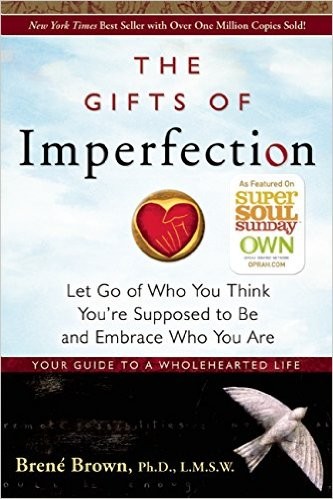
The Gifts of Imperfection
When does accepting imperfection enable honest action, and when can it excuse avoidable harm?
A lens on shame, worthiness, and belonging that separates humane self-acceptance from exemption from responsibility.
- Edition
- Original Hazelden paperback edition. ISBN 9781592858491. A revised tenth-anniversary edition appeared in 2020.
- Reviewed
- August 26, 2026
- Sources
- 3
Lens
Accepting imperfection can reduce the shame that blocks learning and connection. It should make repair more possible, not lower the obligation to acknowledge consequences and change behavior.
A lens on shame, worthiness, and belonging that separates humane self-acceptance from exemption from responsibility. The useful move is not to adopt a slogan. It is to distinguish the book’s proposal from the conditions under which that proposal is responsible.
Worth and behavior
Separate human worth from evaluation of an action.
Shame resilience
Bring painful self-judgment into language and connection where safety permits.
Authenticity with context
Match disclosure to trust, power, and consequence.
Accountable acceptance
Use self-compassion to support repair rather than escape it.
Counter-lens
Self-acceptance can become vague if consequences disappear. Some shame is socially imposed and unjust; some discomfort follows accurate recognition of harm. “Authenticity” is also not context-free. People with less power often face higher costs for disclosure, refusal, or visible imperfection.
Evidence
Brown’s framework emerged from qualitative research on shame, vulnerability, and “wholehearted” living. Qualitative inquiry can develop concepts and describe experience; it does not by itself establish population prevalence or causal effects. The book’s #1 New York Times bestseller status demonstrates reach, while the tenth-anniversary edition shows durable publisher support.
The applications for The Gifts of Imperfection are editorial transfers directed at this question: When does accepting imperfection enable honest action, and when can it excuse avoidable harm? They remain proposed experiments, not reported outcomes or claims that Utpal Vaishnav has used the method. Their evidence must be assessed separately from the book’s influence or the coherence of its argument.
Limits
- Qualitative categories should not be treated as universal personality laws.
- Popularity does not validate every psychological claim.
- Vulnerability depends on safety, trust, timing, and power.
- Perfectionism may require clinical support when linked to anxiety, trauma, or disordered behavior.
Apply to my situation
Use four sentences: what happened; what effect it had; what story about your worth appeared; and what repair is available. Share only with a person who has earned access. The purpose is to restore accurate responsibility without turning the self into the offense.
Experiment
Choose one low-risk task delayed by perfectionism. Define an adequate standard and a review point, complete it, then ask one trusted person for specific feedback. Record whether the bounded standard improved learning or merely concealed carelessness. Revise the standard accordingly.
Reflection
- Which standard protects quality and which protects image?
- What does accountability require after self-acceptance?
- Where would vulnerability be unsafe or coerced?
- Is the shame internally generated or socially imposed?
Revision
Revise when stronger research alters the account of shame or perfectionism, when edition comparison changes a retained guidepost, or when applications blur the line between imperfection and preventable harm.
Sources
- Brené Brown, The Gifts of Imperfection. Hazelden Publishing, 2010. ISBN 9781592858491. Edition record.
- Brené Brown, The Gifts of Imperfection, 10th Anniversary Edition. Random House, 2020.
- Brené Brown, Shame Resilience Theory: A Grounded Theory Study on Women and Shame. Families in Society, 2006.
Continue the inquiry
Research this book lens with AI
Research The Gifts of Imperfection as a maintained KNOLTOK lens, not as a summary or endorsement. Reader question: When does accepting imperfection enable honest action, and when can it excuse avoidable harm? Current synthesis: A lens on shame, worthiness, and belonging that separates humane self-acceptance from exemption from responsibility. Current evidence status: mixed. Selected primary edition and provenance: title: "The Gifts of Imperfection"; author: "Brené Brown"; publisher: "Hazelden Publishing"; publication date: "2010-08-27"; edition note: "Original Hazelden paperback edition. ISBN 9781592858491. A revised tenth-anniversary edition appeared in 2020."; URL: "https://www.hazelden.org/store/item/4812" Current Lens claim to test: Accepting imperfection can reduce the shame that blocks learning and connection. It should make repair more possible, not lower the obligation to acknowledge consequences and change behavior. A lens on shame, worthiness, and belonging that separates humane self-acceptance from exemption from responsibility. The useful move is not to adopt a slogan. It is to distinguish the book's proposal from the conditions under which that proposal is responsible. Worth and behavior Separate human worth from evaluation of an action. Shame resilience Bring painful self-judgment into language and connection where safety permits. Authenticity with context Match disclosure Current Counter-lens to strengthen or correct: Self-acceptance can become vague if consequences disappear. Some shame is socially imposed and unjust; some discomfort follows accurate recognition of harm. “Authenticity” is also not context-free. People with less power often face higher costs for disclosure, refusal, or visible imperfection. Current Limits to verify: - Qualitative categories should not be treated as universal personality laws. - Popularity does not validate every psychological claim. - Vulnerability depends on safety, trust, timing, and power. - Perfectionism may require clinical support when linked to anxiety, trauma, or disordered behavior. Practical move under consideration: Name one mistake without converting it into a verdict on your worth. Identify its effect, make one repair, and choose one changed behavior that can be observed. Research these claims through strategy, organizational evidence, incentives, base rates, selection effects, and stakeholder outcomes; psychology, behavior change, construct validity, intervention evidence, and structural explanations; finance, survivorship, leverage, downside allocation, distribution, and institutional opportunity; learning science, epistemology, replication, transfer, measurement, and alternative explanations. Verify book-derived formulations against the selected edition and do not silently substitute another edition. Separate: what the book claims; KNOLTOK's interpretation; independent evidence; application proposals; recognition or influence; credible disagreement; and unresolved uncertainty. Treat sales, fame, anecdotes, cases, and publisher or company claims as reach or self-description, not independent proof. Do not invent quotations, page numbers, personal experience, outcomes, authorial intent, or consensus. Do not infer Utpal Vaishnav's private view beyond the text above. Start with the registered sources below, assess their interests and limitations, and then find stronger primary records, peer-reviewed research, authoritative datasets, critical scholarship, or stakeholder evidence. Do not merely repeat the registered sources: - https://www.hazelden.org/store/item/4812 - https://penguinrandomhouselibrary.com/book/?isbn=9780593133583 - https://doi.org/10.1606/1044-3894.3483 Return a claim ledger with 6 to 12 material claims. For each provide: exact claim; claim class; attribution; edition or page verification status; best supporting evidence with a direct link; strongest counterevidence or alternative explanation with a direct link; confidence as high, medium, low, or unresolved; transfer conditions; affected stakeholders; possible harm if overstated; and a keep, narrow, rewrite, or remove recommendation. Then provide source-quality notes, missing perspectives, contradictions with the current lens, 3 to 5 proposed revisions, one reversible experiment with baseline and stop condition, and explicit revision or retirement triggers. Use direct links and full citations. Quote only when exact wording materially matters and has been verified.
About this lens
Primary book: The Gifts of Imperfection by Brené Brown, Original Hazelden paperback edition. ISBN 9781592858491. A revised tenth-anniversary edition appeared in 2020.
Lens author: Utpal Vaishnav. The interpretation, personal experience, and conclusions belong to the lens author.
AI assistance: AI assisted with source discovery, comparison, structure, and drafting. Utpal Vaishnav accepted the exact K200-B04 lens text for publication and remains responsible for the released synthesis. No personal experience, outcome, quotation, or page reference was invented.
Human review: Utpal Vaishnav
- 2026-08-26: Created the K200-B04 private review draft from the confirmed selection, with a full eight-section architecture and edition-specific source record.
- 2026-08-26: Accepted the exact K200-B04 lens text and prepared it for publication with the verified local cover.