
Book lens / Published
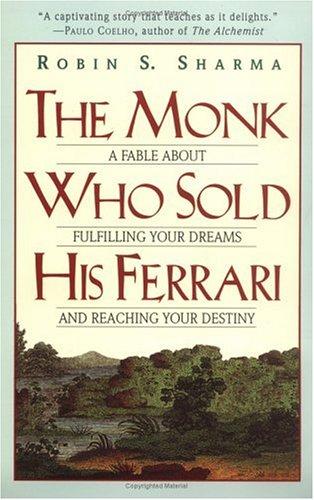
The Monk Who Sold His Ferrari
Must a life collapse before achievement can be separated from meaning?
A culturally cautious lens on visible success, depletion, simplicity, purpose, and spiritual borrowing.
- Edition
- ISBN 9780062515674.
- Reviewed
- August 25, 2026
- Sources
- 1
Lens
The parable begins with a recognizable contradiction: professional success can coexist with physical collapse, emotional emptiness, and a life no longer chosen. Its value is not that wealth or ambition is inherently corrupt. It is that external measures can continue rising after they stop answering the question of what a life is for. Meaningful success needs health, relationship, purpose, and enoughness inside the definition rather than added after achievement.
Evidence
- Visible success can conceal depletion.
- A crisis may reveal values that ordinary incentives suppress.
- Discipline should serve a chosen life rather than become another status performance.
- Simplicity is meaningful only when it is voluntary and does not transfer burdens.
Apply to my situation
For KNOLTOK, use The Monk Who Sold His Ferrari to examine this exact question: Must a life collapse before achievement can be separated from meaning? Begin with the proposed move, ‘Audit one success measure for what it gives, what it consumes, and what a sufficient alternative would protect’. State the mechanism, transfer conditions, affected people, contrary evidence, and the observation that would change the decision. This is an application proposal, not a claim that Utpal Vaishnav has used it or obtained a particular result.
Counter-lens
The fictional journey romanticizes India, Himalayan wisdom, and monastic life for a largely Western self-help audience. Distinct traditions are compressed into portable lessons. Commercial descriptions and sales figures establish popularity, not spiritual or psychological validity. Renunciation can be inaccessible to people with care, debt, health, or social obligations. The lens must not present burnout recovery as a scenic individual escape from institutional causes.
Experiment
Choose one success metric and list its gains, recurring costs, and affected relationships. Define an enough threshold and one boundary that can be tested without abandoning obligations.
Record the initial assumption, intervention, observation, and next adjustment. Do not convert one result into a general law or personal identity claim.
Reflection
- Which claims about The Monk Who Sold His Ferrari belong to the selected edition, and which are later interpretation?
- What independent evidence would change the answer to this question: Must a life collapse before achievement can be separated from meaning?
- Who benefits from the proposed move, who carries its downside, and who can appeal?
- Which domain, timing, cultural, institutional, or historical conditions limit transfer?
- What finding would require narrowing or retiring this lens?
Revision
- Evidence status: practice-informed.
- Curated and authored by Utpal Vaishnav; no personal reading or application is claimed.
- Publication state: K200-B02 exact text accepted by Utpal Vaishnav.
Limits
The transfer boundary for The Monk Who Sold His Ferrari is built into its question: Must a life collapse before achievement can be separated from meaning? Do not generalize from a memorable example or retrospective success. Test domain, timing, resources, incentives, power, consent, and who bears the downside.
Continue the inquiry
Research this book lens with AI
Research The Monk Who Sold His Ferrari as a maintained KNOLTOK lens, not as a summary or endorsement. Reader question: Must a life collapse before achievement can be separated from meaning? Current synthesis: A culturally cautious lens on visible success, depletion, simplicity, purpose, and spiritual borrowing. Current evidence status: practice-informed. Selected primary edition and provenance: title: "The Monk Who Sold His Ferrari"; author: "Robin Sharma"; publisher: "HarperOne"; publication date: "1999-04-21"; edition note: "ISBN 9780062515674."; URL: "https://openlibrary.org/isbn/9780062515674" Current Lens claim to test: The parable begins with a recognizable contradiction: professional success can coexist with physical collapse, emotional emptiness, and a life no longer chosen. Its value is not that wealth or ambition is inherently corrupt. It is that external measures can continue rising after they stop answering the question of what a life is for. Meaningful success needs health, relationship, purpose, and enoughness inside the definition rather than added after achievement. Current Counter-lens to strengthen or correct: The fictional journey romanticizes India, Himalayan wisdom, and monastic life for a largely Western self-help audience. Distinct traditions are compressed into portable lessons. Commercial descriptions and sales figures establish popularity, not spiritual or psychological validity. Renunciation can be inaccessible to people with care, debt, health, or social obligations. The lens must not present burnout recovery as a scenic individual escape from institutional causes. Current Limits to verify: The transfer boundary for The Monk Who Sold His Ferrari is built into its question: Must a life collapse before achievement can be separated from meaning? Do not generalize from a memorable example or retrospective success. Test domain, timing, resources, incentives, power, consent, and who bears the downside. Practical move under consideration: Audit one success measure for what it gives, what it consumes, and what a sufficient alternative would protect. Research these claims through literary form, authorial context, reception, and the boundary between interpretation and external fact; psychology, behavior change, construct validity, intervention evidence, and structural explanations; finance, survivorship, leverage, downside allocation, distribution, and institutional opportunity; religious studies, historical context, testimony, practice outcomes, and metaphysical claims. Verify book-derived formulations against the selected edition and do not silently substitute another edition. Separate: what the book claims; KNOLTOK's interpretation; independent evidence; application proposals; recognition or influence; credible disagreement; and unresolved uncertainty. Treat sales, fame, anecdotes, cases, and publisher or company claims as reach or self-description, not independent proof. Do not invent quotations, page numbers, personal experience, outcomes, authorial intent, or consensus. Do not infer Utpal Vaishnav's private view beyond the text above. Start with the registered sources below, assess their interests and limitations, and then find stronger primary records, peer-reviewed research, authoritative datasets, critical scholarship, or stakeholder evidence. Do not merely repeat the registered sources: - https://openlibrary.org/isbn/9780062515674 Return a claim ledger with 6 to 12 material claims. For each provide: exact claim; claim class; attribution; edition or page verification status; best supporting evidence with a direct link; strongest counterevidence or alternative explanation with a direct link; confidence as high, medium, low, or unresolved; transfer conditions; affected stakeholders; possible harm if overstated; and a keep, narrow, rewrite, or remove recommendation. Then provide source-quality notes, missing perspectives, contradictions with the current lens, 3 to 5 proposed revisions, one reversible experiment with baseline and stop condition, and explicit revision or retirement triggers. Use direct links and full citations. Quote only when exact wording materially matters and has been verified.
About this lens
Primary book: The Monk Who Sold His Ferrari by Robin Sharma, ISBN 9780062515674.
Lens author: Utpal Vaishnav. The interpretation, personal experience, and conclusions belong to the lens author.
AI assistance: AI assisted with research, structure, and drafting. Utpal Vaishnav accepted the exact text for publication. No personal experience was invented.
Human review: Utpal Vaishnav
- 2026-08-25: Prepared the K200-B02 local review lens.
- 2026-08-25: Published after Utpal Vaishnav confirmed K200-B02 exact text.