
Book lens / Published
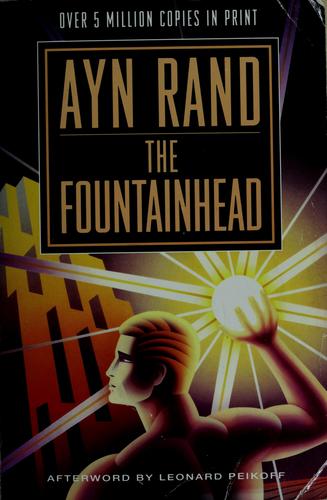
The Fountainhead
When does independence protect creative integrity, and when does it become contempt for dependence and obligation?
A critical lens on vocation, authorship, conformity, power, and the mythology of the solitary creator.
- Edition
- ISBN 9780452273337.
- Reviewed
- August 25, 2026
- Sources
- 3
Lens
Rand’s novel gives unusual dramatic force to the conflict between creative judgment and social approval. Howard Roark makes vocation appear indivisible: the work cannot remain his if its governing idea is surrendered for prestige. That tension matters wherever committees, markets, patrons, or institutions can dilute responsibility. Yet the novel also turns interdependence into moral suspicion. Real creation relies on predecessors, collaborators, workers, clients, law, and public consequence. Integrity is not proved by isolation.
Evidence
- Approval can become a substitute for judgment.
- A creator needs a standard beyond popularity.
- Patronage and institutional power can corrupt both rebellion and conformity.
- Independence deserves limits where choices impose risk, coercion, or irreversible cost on others.
Apply to my situation
For KNOLTOK, use The Fountainhead to examine this exact question: When does independence protect creative integrity, and when does it become contempt for dependence and obligation? Begin with the proposed move, ‘Name one compromise threatening the work and one obligation the creator cannot ethically dismiss. Design around both’. State the mechanism, transfer conditions, affected people, contrary evidence, and the observation that would change the decision. This is an application proposal, not a claim that Utpal Vaishnav has used it or obtained a particular result.
Counter-lens
This is philosophical fiction, not evidence that creators or societies behave as its characters do. Rand constructs polarities that sharpen ideas while reducing psychological and social complexity. The novel’s politics are deeply contested. Its treatment of sex and consent requires direct critical attention rather than euphemism. Sales and cultural endurance establish influence, not ethical authority. Architectural history should not be inferred from fictional careers without independent sources.
Experiment
For one creative decision, write the non-negotiable design principle, the evidence behind it, the people affected, and the conditions under which revision would be integrity rather than surrender.
Record the initial assumption, the intervention, the observation, and the next adjustment. Do not convert one result into a general law or a personal identity claim.
Reflection
- Which claims about The Fountainhead belong to the selected edition, and which are later interpretation?
- What independent evidence would change the answer to this question: When does independence protect creative integrity, and when does it become contempt for dependence and obligation?
- Who benefits from the proposed move, who carries its downside, and who can appeal?
- Which domain, timing, cultural, institutional, or historical conditions limit transfer?
- What finding would require narrowing or retiring this lens?
Revision
- Evidence status: contested.
- Curated and authored by Utpal Vaishnav; no personal reading or application is claimed.
- Publication state: K200-B02 exact text accepted by Utpal Vaishnav.
Revise if stronger literary or architectural scholarship changes the interpretation. Reject any application that treats fictional heroism as evidence that creators are exempt from consent, safety, law, collaboration, or consequences.
Limits
This is a philosophical novel, not empirical evidence about how architecture or innovation succeeds. Rand’s own account is useful for authorial purpose but is an interested source, not the only permissible interpretation. Architecture is collaborative, regulated, financed, constructed, occupied, and maintained by many people. Creative integrity does not confer unilateral rights over clients, workers, residents, or public risk.
Continue the inquiry
Research this book lens with AI
Research The Fountainhead as a maintained KNOLTOK lens, not as a summary or endorsement. Reader question: When does independence protect creative integrity, and when does it become contempt for dependence and obligation? Current synthesis: A critical lens on vocation, authorship, conformity, power, and the mythology of the solitary creator. Current evidence status: contested. Selected primary edition and provenance: title: "The Fountainhead"; author: "Ayn Rand"; publisher: "Signet"; publication date: "1994-09-01"; edition note: "ISBN 9780452273337."; URL: "https://www.penguinrandomhouse.com/books/296786/the-fountainhead-by-ayn-rand/" Current Lens claim to test: Rand's novel gives unusual dramatic force to the conflict between creative judgment and social approval. Howard Roark makes vocation appear indivisible: the work cannot remain his if its governing idea is surrendered for prestige. That tension matters wherever committees, markets, patrons, or institutions can dilute responsibility. Yet the novel also turns interdependence into moral suspicion. Real creation relies on predecessors, collaborators, workers, clients, law, and public consequence. Integrity is not proved by isolation. Current Counter-lens to strengthen or correct: This is philosophical fiction, not evidence that creators or societies behave as its characters do. Rand constructs polarities that sharpen ideas while reducing psychological and social complexity. The novel's politics are deeply contested. Its treatment of sex and consent requires direct critical attention rather than euphemism. Sales and cultural endurance establish influence, not ethical authority. Architectural history should not be inferred from fictional careers without independent sources. Current Limits to verify: This is a philosophical novel, not empirical evidence about how architecture or innovation succeeds. Rand's own account is useful for authorial purpose but is an interested source, not the only permissible interpretation. Architecture is collaborative, regulated, financed, constructed, occupied, and maintained by many people. Creative integrity does not confer unilateral rights over clients, workers, residents, or public risk. Practical move under consideration: Name one compromise threatening the work and one obligation the creator cannot ethically dismiss. Design around both. Research these claims through literary form, authorial context, reception, and the boundary between interpretation and external fact; strategy, organizational evidence, incentives, base rates, selection effects, and stakeholder outcomes; psychology, behavior change, construct validity, intervention evidence, and structural explanations; finance, survivorship, leverage, downside allocation, distribution, and institutional opportunity. Verify book-derived formulations against the selected edition and do not silently substitute another edition. Separate: what the book claims; KNOLTOK's interpretation; independent evidence; application proposals; recognition or influence; credible disagreement; and unresolved uncertainty. Treat sales, fame, anecdotes, cases, and publisher or company claims as reach or self-description, not independent proof. Do not invent quotations, page numbers, personal experience, outcomes, authorial intent, or consensus. Do not infer Utpal Vaishnav's private view beyond the text above. Start with the registered sources below, assess their interests and limitations, and then find stronger primary records, peer-reviewed research, authoritative datasets, critical scholarship, or stakeholder evidence. Do not merely repeat the registered sources: - https://www.penguinrandomhouse.com/books/296786/the-fountainhead-by-ayn-rand/ - https://aynrand.org/novels/the-fountainhead/ - https://www.archdaily.com/447141/the-fountainhead-everything-that-s-wrong-with-architecture Return a claim ledger with 6 to 12 material claims. For each provide: exact claim; claim class; attribution; edition or page verification status; best supporting evidence with a direct link; strongest counterevidence or alternative explanation with a direct link; confidence as high, medium, low, or unresolved; transfer conditions; affected stakeholders; possible harm if overstated; and a keep, narrow, rewrite, or remove recommendation. Then provide source-quality notes, missing perspectives, contradictions with the current lens, 3 to 5 proposed revisions, one reversible experiment with baseline and stop condition, and explicit revision or retirement triggers. Use direct links and full citations. Quote only when exact wording materially matters and has been verified.
About this lens
Primary book: The Fountainhead by Ayn Rand, ISBN 9780452273337.
Lens author: Utpal Vaishnav. The interpretation, personal experience, and conclusions belong to the lens author.
AI assistance: AI assisted with research, structure, and drafting. Utpal Vaishnav accepted the exact text for publication. No personal experience was invented.
Human review: Utpal Vaishnav
- 2026-08-25: Prepared the K200-B02 local review lens.
- 2026-08-25: Published after Utpal Vaishnav confirmed K200-B02 exact text.
- 2026-08-26: Deepened the literary lens with authorial context, architectural criticism, application, and revision boundaries.