
Book lens / Published
Hackers & Painters
What becomes possible when programming is treated as creative making, and what disappears when one subculture defines the maker?
A lens on software as craft, exploratory creation, language, taste, and the boundaries of hacker culture.
- Edition
- ISBN 9780596006624.
- Reviewed
- August 25, 2026
- Sources
- 1
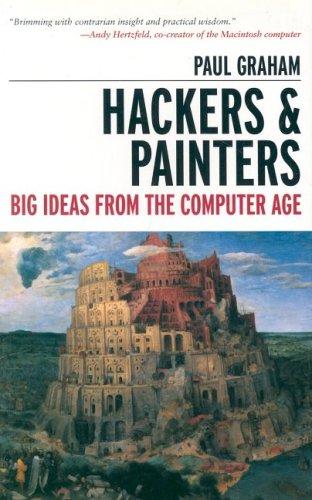
Lens
Graham’s strongest analogy is that software can be made through exploration. A programmer does not always execute a complete design formed in advance. Building reveals the problem, and revision becomes part of thought. That view protects taste, curiosity, and direct contact with the material from processes that treat code as mechanical transcription. It is especially useful where uncertainty is real. The analogy becomes narrower when hacker identity is treated as a general theory of intelligence, work, or social value.
Evidence
- Prototypes can function as instruments of thought.
- Programming languages influence which ideas feel easy to express.
- Taste develops through making, comparison, and revision.
- Technical autonomy needs accountability when software affects people who cannot inspect or refuse it.
Apply to my situation
For KNOLTOK, use Hackers & Painters to examine this exact question: What becomes possible when programming is treated as creative making, and what disappears when one subculture defines the maker? Begin with the proposed move, ‘Build one small working version before finalizing the specification, then document what contact with the material changed’. State the mechanism, transfer conditions, affected people, contrary evidence, and the observation that would change the decision. This is an application proposal, not a claim that Utpal Vaishnav has used it or obtained a particular result.
Counter-lens
These essays emerged from early-2000s software and startup culture. Their examples, demographics, labor assumptions, and accounts of hackers are not representative of the whole field. Provocation often substitutes for systematic evidence. Painting and programming share aspects of iteration, but the analogy can hide maintenance, teamwork, safety, accessibility, and infrastructure. The author-controlled page and promotional reviews establish reception, not the accuracy of every claim.
Experiment
Choose one uncertain feature and build the smallest version that can produce feedback. Compare what the working artifact reveals with what the original specification assumed.
Record the initial assumption, intervention, observation, and next adjustment. Do not convert one result into a general law or personal identity claim.
Reflection
- Which claims about Hackers & Painters belong to the selected edition, and which are later interpretation?
- What independent evidence would change the answer to this question: What becomes possible when programming is treated as creative making, and what disappears when one subculture defines the maker?
- Who benefits from the proposed move, who carries its downside, and who can appeal?
- Which domain, timing, cultural, institutional, or historical conditions limit transfer?
- What finding would require narrowing or retiring this lens?
Revision
- Evidence status: practice-informed.
- Curated and authored by Utpal Vaishnav; no personal reading or application is claimed.
- Publication state: K200-B02 exact text accepted by Utpal Vaishnav.
Limits
The transfer boundary for Hackers & Painters is built into its question: What becomes possible when programming is treated as creative making, and what disappears when one subculture defines the maker? Do not generalize from a memorable example or retrospective success. Test domain, timing, resources, incentives, power, consent, and who bears the downside.
Continue the inquiry
Research this book lens with AI
Research Hackers & Painters as a maintained KNOLTOK lens, not as a summary or endorsement. Reader question: What becomes possible when programming is treated as creative making, and what disappears when one subculture defines the maker? Current synthesis: A lens on software as craft, exploratory creation, language, taste, and the boundaries of hacker culture. Current evidence status: practice-informed. Selected primary edition and provenance: title: "Hackers & Painters"; author: "Paul Graham"; publisher: "O'Reilly Media"; publication date: "2004-05-18"; edition note: "ISBN 9780596006624."; URL: "https://www.oreilly.com/library/view/hackers-painters/0596006624/" Current Lens claim to test: Graham's strongest analogy is that software can be made through exploration. A programmer does not always execute a complete design formed in advance. Building reveals the problem, and revision becomes part of thought. That view protects taste, curiosity, and direct contact with the material from processes that treat code as mechanical transcription. It is especially useful where uncertainty is real. The analogy becomes narrower when hacker identity is treated as a general theory of intelligence, work, or social value. Current Counter-lens to strengthen or correct: These essays emerged from early-2000s software and startup culture. Their examples, demographics, labor assumptions, and accounts of hackers are not representative of the whole field. Provocation often substitutes for systematic evidence. Painting and programming share aspects of iteration, but the analogy can hide maintenance, teamwork, safety, accessibility, and infrastructure. The author-controlled page and promotional reviews establish reception, not the accuracy of every claim. Current Limits to verify: The transfer boundary for Hackers & Painters is built into its question: What becomes possible when programming is treated as creative making, and what disappears when one subculture defines the maker? Do not generalize from a memorable example or retrospective success. Test domain, timing, resources, incentives, power, consent, and who bears the downside. Practical move under consideration: Build one small working version before finalizing the specification, then document what contact with the material changed. Research these claims through systems research, causal mechanisms, measurement, feedback, boundary conditions, and second-order effects; organizational behavior, power, worker experience, governance, law, and accountable dissent; political economy, law, legitimacy, geography, distribution, and affected communities. Verify book-derived formulations against the selected edition and do not silently substitute another edition. Separate: what the book claims; KNOLTOK's interpretation; independent evidence; application proposals; recognition or influence; credible disagreement; and unresolved uncertainty. Treat sales, fame, anecdotes, cases, and publisher or company claims as reach or self-description, not independent proof. Do not invent quotations, page numbers, personal experience, outcomes, authorial intent, or consensus. Do not infer Utpal Vaishnav's private view beyond the text above. Start with the registered sources below, assess their interests and limitations, and then find stronger primary records, peer-reviewed research, authoritative datasets, critical scholarship, or stakeholder evidence. Do not merely repeat the registered sources: - https://www.oreilly.com/library/view/hackers-painters/0596006624/ Return a claim ledger with 6 to 12 material claims. For each provide: exact claim; claim class; attribution; edition or page verification status; best supporting evidence with a direct link; strongest counterevidence or alternative explanation with a direct link; confidence as high, medium, low, or unresolved; transfer conditions; affected stakeholders; possible harm if overstated; and a keep, narrow, rewrite, or remove recommendation. Then provide source-quality notes, missing perspectives, contradictions with the current lens, 3 to 5 proposed revisions, one reversible experiment with baseline and stop condition, and explicit revision or retirement triggers. Use direct links and full citations. Quote only when exact wording materially matters and has been verified.
About this lens
Primary book: Hackers & Painters by Paul Graham, ISBN 9780596006624.
Lens author: Utpal Vaishnav. The interpretation, personal experience, and conclusions belong to the lens author.
AI assistance: AI assisted with research, structure, and drafting. Utpal Vaishnav accepted the exact text for publication. No personal experience was invented.
Human review: Utpal Vaishnav
- 2026-08-25: Prepared the K200-B02 local review lens.
- 2026-08-25: Published after Utpal Vaishnav confirmed K200-B02 exact text.