
Book lens / Published
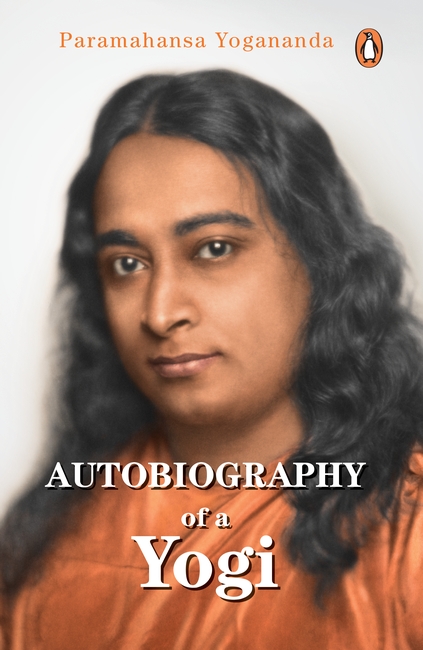
Autobiography of a Yogi
How should a modern reader distinguish spiritual testimony, metaphor, hagiography, and literal claim?
A respectful but evidence-bounded reading of spiritual vocation, discipline, and self-realization.
- Edition
- Complete edition prepared with YSS and SRF, ISBN 9780143463207. The publisher records July 2023 without an exact day, so no day-level date is asserted.
- Reviewed
- August 25, 2026
- Sources
- 5
Lens
Read spiritual autobiography with respect and category discipline. The book presents a life organized around spiritual search, lineage, disciplined practice, service, and experiences understood as encounters with a larger reality. Its meaning cannot be understood if its metaphysical commitments are reduced to decoration. Its external claims cannot be established merely by honoring their spiritual meaning.
Distinguish at least 5 claim classes:
- Testimonial: what Yogananda says he experienced, remembered, or was told.
- Historical: dates, journeys, institutions, meetings, publications, and public events.
- Practical: disciplines of attention, conduct, devotion, breath, or meditation.
- Metaphysical: claims about divine reality, karma, reincarnation, subtle laws, or liberation.
- Miraculous or scientific-sounding: claims about bodies, matter, healing, perception, or causation that enter empirical domains.
One passage can contain several classes. They should be separated before being evaluated. Testimony supports the proposition that an experience was reported and interpreted in a particular way. It does not, by itself, establish every external explanation of that experience.
The book is also a constructed public work, not an unfiltered transcript of a life. Genre, audience, religious mission, memory, editorial history, and institutional stewardship all shape what appears on the page.
Counter-lens
A category ledger can become a distancing device. A reader may dissect the text so thoroughly that the devotional, ethical, and life-changing intent disappears. Religious testimony is not simply failed laboratory reporting. Hagiography can transmit ideals, lineage, and sacred meaning through a form that does not share the aims of critical biography.
The opposite failure is devotional overreach. Personal resonance, institutional authority, the prestige of a teacher, or the felt benefit of a practice can be allowed to certify unrelated historical, medical, or physical claims. That move asks one kind of warrant to do the work of another.
The better counterposition is double attention: enter the work far enough to understand what kind of life it proposes, and step outside it far enough to examine provenance, genre, institutions, and evidence.
Evidence
The primary evidence is edition-specific. Penguin Random House India lists ISBN 9780143463207 as a 584-page paperback published in July 2023 and describes it as a complete edition prepared with Yogoda Satsanga Society of India and Self-Realization Fellowship. The publisher says it includes material added after the 1946 edition. That verifies the selected edition’s public metadata and stated editorial lineage. It does not independently verify every authorial or institutional claim inside the text.
Historical scholarship complicates the image of a timeless teaching transmitted unchanged. Anya Foxen’s Oxford Bibliographies entry places Yogananda within a modern, syncretic formation involving Kriya Yoga, devotional traditions, Neo-Vedanta, Christianity, Western metaphysical thought, calisthenics, publishing, and correspondence courses. David J. Neumann’s critical biography treats him as a transnational Hindu missionary and a builder of a new public role for the global guru. This context does not disprove religious claims. It shows that the form in which readers receive them has a history.
Neumann’s research on Yogananda’s marketing of yoga-based religion also warns against turning the work into generic wellness advice. God-realization, not posture, productivity, or stress reduction, was central to Yogananda’s project. A reading that extracts only self-help techniques may be practical, but it is incomplete.
Evidence boundaries remain firm:
- Autobiographical testimony is primary evidence of a narrated life and its self-understanding.
- Critical biography can corroborate, contextualize, or challenge public historical claims.
- Institutional edition histories are useful provenance, but they are interested sources.
- Practice outcomes require evidence about the particular practice and outcome.
- Metaphysical and miraculous claims are not converted into scientific findings by scientific vocabulary.
Limits
This lens does not decide whether Yogananda’s metaphysical claims are true. It does not diagnose extraordinary experiences, reduce them to pathology, or invent a private spiritual response for the reader. It also does not treat one autobiography as representative of Hinduism, yoga, India, or mystical experience as a whole.
The selected edition has been verified through publisher metadata, not by a page-by-page comparison with the 1946 first edition or every intervening edition. Quotations still need page-level verification against the edition actually used.
The framework can clarify claims, but it cannot reproduce the effects of sustained practice, membership in a tradition, or historical expertise. Nor can a short public lens settle contested questions in the philosophy of religious experience.
Apply to my situation
For KNOLTOK, this book is a test of whether the library can preserve meaning without laundering claims. The operational move is a claim ledger with 5 columns: passage, claim class, warrant offered by the text, external evidence needed, and current judgment.
That ledger prevents 3 editorial errors. It stops spiritual testimony from being mislabeled as empirical confirmation. It stops uncertainty about miracles from erasing the book’s discipline, ethical orientation, and historical influence. It also makes edition provenance visible rather than silently blending texts.
This is an application to the public knowledge system, not a claim about Utpal Vaishnav’s private belief or spiritual experience.
Experiment
Choose one passage with an extraordinary claim and one passage prescribing a practice.
For each, record:
- What happened in the narrative?
- What explanation does the narrator give?
- What is the reader asked to believe, practice, or become?
- What evidence would be appropriate for each element?
- What can be provisionally retained without deciding the whole worldview?
Then write 2 summaries. The first should be intelligible to a committed practitioner without caricature. The second should be acceptable to a critical historian without overstating verification. If the summaries cannot coexist, locate the exact claim causing the conflict.
Reflection
- Where did reverence begin doing evidentiary work?
- Where did skepticism become a refusal to understand the text on its own terms?
- Which claims changed when historical context was added?
- Which practical or ethical insights survive uncertainty about metaphysics?
- Am I reading the selected edition, or relying on quotations detached from edition history?
- What would count as respectful disagreement here?
Revision
Revise this lens when page-level collation establishes material differences relevant to its claims, when stronger historical scholarship changes the account of Yogananda’s public project, or when a cited scientific-sounding claim receives direct empirical assessment.
Demote or narrow any statement that depends only on publisher promotion or institutional self-description. Preserve distinctions among testimony, historical corroboration, practical outcome, and metaphysical commitment even if the reader’s conclusion changes.
Questions still worth pursuing:
- How did the book shape Western encounters with yoga?
- Which revisions were authorial and which were later editorial additions?
Continue the inquiry
Research this book lens with AI
Research Autobiography of a Yogi as a maintained KNOLTOK lens, not as a summary or endorsement. Reader question: How should a modern reader distinguish spiritual testimony, metaphor, hagiography, and literal claim? Current synthesis: A respectful but evidence-bounded reading of spiritual vocation, discipline, and self-realization. Current evidence status: contested. Selected primary edition and provenance: title: "Autobiography of a Yogi"; author: "Paramahansa Yogananda"; publisher: "Penguin Random House India"; edition note: "Complete edition prepared with YSS and SRF, ISBN 9780143463207. The publisher records July 2023 without an exact day, so no day-level date is asserted."; URL: "https://www.penguin.co.in/book/autobiography-of-a-yogi/" Current Lens claim to test: Read spiritual autobiography with respect and category discipline. The book presents a life organized around spiritual search, lineage, disciplined practice, service, and experiences understood as encounters with a larger reality. Its meaning cannot be understood if its metaphysical commitments are reduced to decoration. Its external claims cannot be established merely by honoring their spiritual meaning. Distinguish at least 5 claim classes: 1. Testimonial: what Yogananda says he experienced, remembered, or was told. 2. Historical: dates, journeys, institutions, meetings, publications, and public events. 3. Practical: disciplines of attention, conduct, devotion, breath, or meditation. 4. Metaphysical: claims Current Counter-lens to strengthen or correct: A category ledger can become a distancing device. A reader may dissect the text so thoroughly that the devotional, ethical, and life-changing intent disappears. Religious testimony is not simply failed laboratory reporting. Hagiography can transmit ideals, lineage, and sacred meaning through a form that does not share the aims of critical biography. The opposite failure is devotional overreach. Personal resonance, institutional authority, the prestige of a teacher, or the felt benefit of a practice can be allowed to certify unrelated historical, medical, or physical claims. That move asks one kind of warrant to do the Current Limits to verify: This lens does not decide whether Yogananda's metaphysical claims are true. It does not diagnose extraordinary experiences, reduce them to pathology, or invent a private spiritual response for the reader. It also does not treat one autobiography as representative of Hinduism, yoga, India, or mystical experience as a whole. The selected edition has been verified through publisher metadata, not by a page-by-page comparison with the 1946 first edition or every intervening edition. Quotations still need page-level verification against the edition actually used. The framework can clarify claims, but it cannot reproduce the effects of sustained Practical move under consideration: Choose one passage that makes a factual, metaphysical, and ethical claim. Separate the three before deciding what you retain. Research these claims through literary form, authorial context, reception, and the boundary between interpretation and external fact; strategy, organizational evidence, incentives, base rates, selection effects, and stakeholder outcomes; religious studies, historical context, testimony, practice outcomes, and metaphysical claims; political economy, law, legitimacy, geography, distribution, and affected communities. Verify book-derived formulations against the selected edition and do not silently substitute another edition. Separate: what the book claims; KNOLTOK's interpretation; independent evidence; application proposals; recognition or influence; credible disagreement; and unresolved uncertainty. Treat sales, fame, anecdotes, cases, and publisher or company claims as reach or self-description, not independent proof. Do not invent quotations, page numbers, personal experience, outcomes, authorial intent, or consensus. Do not infer Utpal Vaishnav's private view beyond the text above. Start with the registered sources below, assess their interests and limitations, and then find stronger primary records, peer-reviewed research, authoritative datasets, critical scholarship, or stakeholder evidence. Do not merely repeat the registered sources: - https://www.penguin.co.in/book/autobiography-of-a-yogi/ - https://yogananda.org/autobiography-of-a-yogi - https://academic.oup.com/reference/62357/reference-article-abstract/554507517 - https://academic.oup.com/north-carolina-scholarship-online/book/31050 - https://www.cambridge.org/core/journals/religion-and-american-culture/article/development-of-body-mind-and-soul-paramahansa-yoganandas-marketing-of-yogabased-religion/87226DBD5D6B3927AEBC195D48569A5C Return a claim ledger with 6 to 12 material claims. For each provide: exact claim; claim class; attribution; edition or page verification status; best supporting evidence with a direct link; strongest counterevidence or alternative explanation with a direct link; confidence as high, medium, low, or unresolved; transfer conditions; affected stakeholders; possible harm if overstated; and a keep, narrow, rewrite, or remove recommendation. Then provide source-quality notes, missing perspectives, contradictions with the current lens, 3 to 5 proposed revisions, one reversible experiment with baseline and stop condition, and explicit revision or retirement triggers. Use direct links and full citations. Quote only when exact wording materially matters and has been verified.
About this lens
Primary book: Autobiography of a Yogi by Paramahansa Yogananda, Complete edition prepared with YSS and SRF, ISBN 9780143463207. The publisher records July 2023 without an exact day, so no day-level date is asserted.
Lens author: Utpal Vaishnav. The interpretation, personal experience, and conclusions belong to the lens author.
AI assistance: AI assisted with research, structure, and drafting. Utpal Vaishnav approved the central lens boundary. No spiritual experience was invented.
Human review: Utpal Vaishnav
- 2026-08-25: Created the K200-B01 review draft.
- 2026-08-26: Confirmed the selected 2023 Penguin India complete edition at the publisher level and deepened the lens with historical scholarship, claim classes, counter-lens, application, experiment, reflection, and revision triggers.