
Book lens / Published
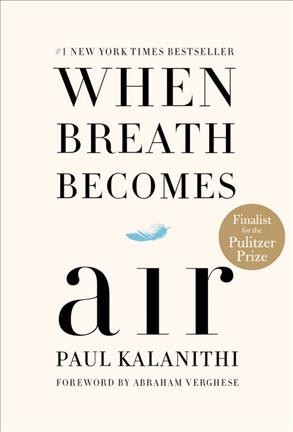
When Breath Becomes Air
When the future contracts, what makes a life still worth choosing from within?
A memoir-centered lens on mortality, medicine, vocation, and love that resists converting one unfinished life into a universal prescription for dying well.
- Edition
- First US hardcover edition. ISBN 9780812988406.
- Reviewed
- August 26, 2026
- Sources
- 3
Lens
Mortality can change which questions matter before it supplies answers. Attend to vocation, relationship, embodiment, and uncertainty without demanding serenity or a redemptive ending.
A memoir-centered lens on mortality, medicine, vocation, and love that resists converting one unfinished life into a universal prescription for dying well. The useful move is not to adopt a slogan. It is to distinguish the book’s proposal from the conditions under which that proposal is responsible.
Mortality
Let finitude revise the question of value without pretending it resolves it.
Vocation
Examine what work means when mastery and future recognition are interrupted.
Relationship
Notice that meaning is held with others, not produced by an isolated will.
Unfinishedness
Allow a life and a book to remain incomplete.
Counter-lens
A beautiful account can create a hidden norm: lucid, productive, reconciled dying. Many deaths include confusion, anger, poverty, isolation, disability, inadequate care, or no opportunity to write. Meaning may be relational and fragmentary; it is not a standard against which a patient should be judged.
Evidence
This is literary testimony, not a clinical intervention. It was a finalist for the 2017 Pulitzer Prize in Biography or Autobiography and a #1 New York Times bestseller. Those distinctions support literary recognition and reach. Lucy Kalanithi’s epilogue and role in bringing the unfinished manuscript to readers are integral to the edition.
The applications for When Breath Becomes Air are editorial transfers directed at this question: When the future contracts, what makes a life still worth choosing from within? They remain proposed experiments, not reported outcomes or claims that Utpal Vaishnav has used the method. Their evidence must be assessed separately from the book’s influence or the coherence of its argument.
Limits
- One physician-patient memoir cannot represent terminal illness broadly.
- Literary coherence is partly created through retrospective selection and editing.
- Medical expertise does not eliminate uncertainty from the patient role.
- Access to family support and specialist care is unequally distributed.
Apply to my situation
Write two lists: what the current future no longer guarantees and what still matters without that guarantee. Choose one relationship, craft, duty, or experience from the second list. Ask what a proportionate act looks like under present energy and care needs.
Experiment
For seven days, ask at day’s end what felt worth attention and what was merely urgent. Do not optimize the answers. Review them with a trusted person and notice whether the pattern suggests a conversation, boundary, or small reallocation.
Reflection
- Who is carrying the care that makes meaning-making possible?
- What if no redemptive lesson arrives?
- Which ambition remains valuable without completion?
- How can uncertainty be shared rather than solved?
Revision
Revise if the lens universalizes Kalanithi’s death, omits Lucy Kalanithi’s authorship of the epilogue, or turns literary recognition into medical authority.
Sources
- Paul Kalanithi, When Breath Becomes Air. Random House, 2016. ISBN 9780812988406. Edition record.
- Paul Kalanithi, The 2017 Pulitzer Prize Finalist in Biography. The Pulitzer Prizes, 2017.
- Paul Kalanithi, When Breath Becomes Air. Penguin Random House, 2016.
Continue the inquiry
Research this book lens with AI
Research When Breath Becomes Air as a maintained KNOLTOK lens, not as a summary or endorsement. Reader question: When the future contracts, what makes a life still worth choosing from within? Current synthesis: A memoir-centered lens on mortality, medicine, vocation, and love that resists converting one unfinished life into a universal prescription for dying well. Current evidence status: mixed. Selected primary edition and provenance: title: "When Breath Becomes Air"; author: "Paul Kalanithi"; publisher: "Random House"; publication date: "2016-01-12"; edition note: "First US hardcover edition. ISBN 9780812988406."; URL: "https://www.penguinrandomhouse.com/books/258507/when-breath-becomes-air-by-paul-kalanithi/9780812988406/" Current Lens claim to test: Mortality can change which questions matter before it supplies answers. Attend to vocation, relationship, embodiment, and uncertainty without demanding serenity or a redemptive ending. A memoir-centered lens on mortality, medicine, vocation, and love that resists converting one unfinished life into a universal prescription for dying well. The useful move is not to adopt a slogan. It is to distinguish the book's proposal from the conditions under which that proposal is responsible. Mortality Let finitude revise the question of value without pretending it resolves it. Vocation Examine what work means when mastery and future recognition are Current Counter-lens to strengthen or correct: A beautiful account can create a hidden norm: lucid, productive, reconciled dying. Many deaths include confusion, anger, poverty, isolation, disability, inadequate care, or no opportunity to write. Meaning may be relational and fragmentary; it is not a standard against which a patient should be judged. Current Limits to verify: - One physician-patient memoir cannot represent terminal illness broadly. - Literary coherence is partly created through retrospective selection and editing. - Medical expertise does not eliminate uncertainty from the patient role. - Access to family support and specialist care is unequally distributed. Practical move under consideration: Choose one postponed conversation or act whose value would remain even if the long-term plan changed. Make it small enough to do this week and important enough not to be mere urgency. Research these claims through literary form, authorial context, reception, and the boundary between interpretation and external fact; strategy, organizational evidence, incentives, base rates, selection effects, and stakeholder outcomes; power, consent, reciprocity, unequal alternatives, privacy, and relationship-specific evidence. Verify book-derived formulations against the selected edition and do not silently substitute another edition. Separate: what the book claims; KNOLTOK's interpretation; independent evidence; application proposals; recognition or influence; credible disagreement; and unresolved uncertainty. Treat sales, fame, anecdotes, cases, and publisher or company claims as reach or self-description, not independent proof. Do not invent quotations, page numbers, personal experience, outcomes, authorial intent, or consensus. Do not infer Utpal Vaishnav's private view beyond the text above. Start with the registered sources below, assess their interests and limitations, and then find stronger primary records, peer-reviewed research, authoritative datasets, critical scholarship, or stakeholder evidence. Do not merely repeat the registered sources: - https://www.penguinrandomhouse.com/books/258507/when-breath-becomes-air-by-paul-kalanithi/9780812988406/ - https://www.pulitzer.org/finalists/paul-kalanithi - https://www.penguinrandomhouse.com/books/258507/when-breath-becomes-air-by-paul-kalanithi/9780812988413/ Return a claim ledger with 6 to 12 material claims. For each provide: exact claim; claim class; attribution; edition or page verification status; best supporting evidence with a direct link; strongest counterevidence or alternative explanation with a direct link; confidence as high, medium, low, or unresolved; transfer conditions; affected stakeholders; possible harm if overstated; and a keep, narrow, rewrite, or remove recommendation. Then provide source-quality notes, missing perspectives, contradictions with the current lens, 3 to 5 proposed revisions, one reversible experiment with baseline and stop condition, and explicit revision or retirement triggers. Use direct links and full citations. Quote only when exact wording materially matters and has been verified.
About this lens
Primary book: When Breath Becomes Air by Paul Kalanithi, First US hardcover edition. ISBN 9780812988406.
Lens author: Utpal Vaishnav. The interpretation, personal experience, and conclusions belong to the lens author.
AI assistance: AI assisted with source discovery, comparison, structure, and drafting. Utpal Vaishnav accepted the exact K200-B04 lens text for publication and remains responsible for the released synthesis. No personal experience, outcome, quotation, or page reference was invented.
Human review: Utpal Vaishnav
- 2026-08-26: Created the K200-B04 private review draft from the confirmed selection, with a full eight-section architecture and edition-specific source record.
- 2026-08-26: Accepted the exact K200-B04 lens text and prepared it for publication with the verified local cover.