
Book lens / Published
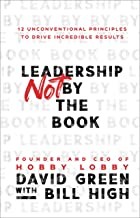
Leadership Not by the Book
Can faith-centered stewardship produce accountable leadership when the owner's convictions also govern employees?
A lens on conviction, generosity, ownership power, religious pluralism, and the difference between benevolent intent and accountable institutions.
- Edition
- ISBN 9781540902245. The cover uses the credit David Green with Bill High.
- Reviewed
- August 26, 2026
- Sources
- 5
Lens
David Green presents leadership as stewardship under Christian conviction. Business ownership is not only control of an asset. It is an obligation to use resources in accordance with faith, generosity, succession, and service.
This is a legitimate contribution to a collection about meaningful success. It rejects the idea that profit is a sufficient purpose and asks owners to place wealth within a moral account larger than themselves.
The difficult question concerns power. An owner can choose a religious discipline for personal conduct. Employees experience that conviction through policies, benefits, schedules, speech, hiring, and legal claims. They may not share the faith and cannot always leave without serious cost.
Evidence
- Ownership creates obligations beyond financial return.
- Succession should prepare institutions and people, not only transfer wealth.
- Giving can be governed as a durable practice rather than an occasional gesture.
- Values become credible through costly decisions, not wall statements.
- Leaders should understand themselves as temporary stewards of authority.
These principles can challenge extractive ownership. They remain incomplete unless the people subject to authority have enforceable protections.
Counter-lens
A founder narrative naturally selects examples that support the founder’s interpretation. Growth, giving, and employee programs may be real while other consequences remain outside the story. Independent evidence is required for claims about scale, culture, generosity, or stakeholder benefit.
Philanthropy also cannot settle the ethics of employment. A company may give extensively and still face serious questions about wages, benefits, discrimination, political influence, or religious liberty. The destination of profit and the means by which profit is earned belong in the same ledger.
Pluralism is the central test. If leadership is grounded in Scripture, what protects an employee who follows another tradition or none? Can that person disagree, seek accommodation, organize, or appeal a decision without being treated as hostile to the mission?
The same test applies after succession. A culture that depends on the founder’s character is fragile even when the founder is sincere. Governance should preserve obligations and limits when a less generous leader inherits the same concentrated authority.
Apply to my situation
A value should be tested from the perspective of a dissenter. If generosity is a principle, are pay and scheduling designed with dignity? If family is honored, whose family counts? If conscience matters, is conscience protected only for the owner?
The stronger form of faith-centered leadership accepts constraints on its own power. It builds procedures that remain fair when trust fails and leadership changes.
Experiment
Choose one organizational value. Draft a policy implementing it, then evaluate 3 people: a committed believer, a respectful dissenter, and a worker with little bargaining power. Revise the policy until each has clear rights, responsibilities, and appeal.
Reflection
- Which book claims are corroborated independently?
- How has Hobby Lobby’s governance affected workers with different beliefs?
- What distinguishes stewardship from paternalism?
- Which institutions preserve generosity after founder succession?
Revision
- Evidence status: contested.
- Publisher and founder claims require independent corroboration.
- Curated and authored by Utpal Vaishnav; no religious position is attributed to him.
- Publication state: published on August 26, 2026.
Revise with independent employee evidence, governance records, and later legal developments. Narrow any conclusion based only on company-reported generosity. Retire applications that make rights depend on an owner’s benevolence or a worker’s religious agreement.
Limits
The book is an owner-authored leadership account. Company claims about pay, benefits, giving, and culture are relevant but interested evidence. The Supreme Court record demonstrates the legal reach of owner convictions into employee benefits; the antiquities settlement demonstrates why sincere mission and generosity cannot substitute for controls, compliance, and outside scrutiny. Neither record alone describes every employee experience.
Continue the inquiry
Research this book lens with AI
Research Leadership Not by the Book as a maintained KNOLTOK lens, not as a summary or endorsement. Reader question: Can faith-centered stewardship produce accountable leadership when the owner's convictions also govern employees? Current synthesis: A lens on conviction, generosity, ownership power, religious pluralism, and the difference between benevolent intent and accountable institutions. Current evidence status: contested. Selected primary edition and provenance: title: "Leadership Not by the Book: 12 Unconventional Principles to Drive Incredible Results"; author: "David Green and Bill High"; publisher: "Baker Books"; publication date: "2022-10-18"; edition note: "ISBN 9781540902245. The cover uses the credit David Green with Bill High."; URL: "https://openlibrary.org/isbn/9781540902245" Current Lens claim to test: David Green presents leadership as stewardship under Christian conviction. Business ownership is not only control of an asset. It is an obligation to use resources in accordance with faith, generosity, succession, and service. This is a legitimate contribution to a collection about meaningful success. It rejects the idea that profit is a sufficient purpose and asks owners to place wealth within a moral account larger than themselves. The difficult question concerns power. An owner can choose a religious discipline for personal conduct. Employees experience that conviction through policies, benefits, schedules, speech, hiring, and legal claims. Current Counter-lens to strengthen or correct: A founder narrative naturally selects examples that support the founder's interpretation. Growth, giving, and employee programs may be real while other consequences remain outside the story. Independent evidence is required for claims about scale, culture, generosity, or stakeholder benefit. Philanthropy also cannot settle the ethics of employment. A company may give extensively and still face serious questions about wages, benefits, discrimination, political influence, or religious liberty. The destination of profit and the means by which profit is earned belong in the same ledger. Pluralism is the central test. If leadership is grounded in Scripture, what Current Limits to verify: The book is an owner-authored leadership account. Company claims about pay, benefits, giving, and culture are relevant but interested evidence. The Supreme Court record demonstrates the legal reach of owner convictions into employee benefits; the antiquities settlement demonstrates why sincere mission and generosity cannot substitute for controls, compliance, and outside scrutiny. Neither record alone describes every employee experience. Practical move under consideration: Translate one value statement into a policy that protects a dissenting employee as clearly as it guides a believing owner. Research these claims through strategy, organizational evidence, incentives, base rates, selection effects, and stakeholder outcomes; systems research, causal mechanisms, measurement, feedback, boundary conditions, and second-order effects; organizational behavior, power, worker experience, governance, law, and accountable dissent; finance, survivorship, leverage, downside allocation, distribution, and institutional opportunity. Verify book-derived formulations against the selected edition and do not silently substitute another edition. Separate: what the book claims; KNOLTOK's interpretation; independent evidence; application proposals; recognition or influence; credible disagreement; and unresolved uncertainty. Treat sales, fame, anecdotes, cases, and publisher or company claims as reach or self-description, not independent proof. Do not invent quotations, page numbers, personal experience, outcomes, authorial intent, or consensus. Do not infer Utpal Vaishnav's private view beyond the text above. Start with the registered sources below, assess their interests and limitations, and then find stronger primary records, peer-reviewed research, authoritative datasets, critical scholarship, or stakeholder evidence. Do not merely repeat the registered sources: - https://openlibrary.org/isbn/9781540902245 - https://newassets.bakerpublishinggroup.com/misc/catalogs/catalog_fa22/FA22_NonFiction_Catalog.pdf - https://www.supremecourt.gov/opinions/boundvolumes/573BV.pdf - https://www.justice.gov/usao-edny/pr/united-states-files-civil-action-forfeit-thousands-ancient-iraqi-artifacts-imported - https://newsroom.hobbylobby.com/articles/hobby-lobby-raises-minimum-wage-to-18-50 Return a claim ledger with 6 to 12 material claims. For each provide: exact claim; claim class; attribution; edition or page verification status; best supporting evidence with a direct link; strongest counterevidence or alternative explanation with a direct link; confidence as high, medium, low, or unresolved; transfer conditions; affected stakeholders; possible harm if overstated; and a keep, narrow, rewrite, or remove recommendation. Then provide source-quality notes, missing perspectives, contradictions with the current lens, 3 to 5 proposed revisions, one reversible experiment with baseline and stop condition, and explicit revision or retirement triggers. Use direct links and full citations. Quote only when exact wording materially matters and has been verified.
About this lens
Primary book: Leadership Not by the Book by David Green and Bill High, ISBN 9781540902245. The cover uses the credit David Green with Bill High.
Lens author: Utpal Vaishnav. The interpretation, personal experience, and conclusions belong to the lens author.
AI assistance: AI assisted with research, structure, and drafting. No religious judgment, company outcome, or personal faith experience was invented.
Human review: Utpal Vaishnav
- 2026-08-26: Prepared the K200-B03 local review lens.
- 2026-08-26: Added legal and institutional evidence, pluralism boundaries, application, reflection, and revision triggers.