
Book lens / Published
The Alchemist
How can The Alchemist help a reader move through fear, discover a calling, and be transformed by pursuing it?
A personal reading of fear, calling, attention, curiosity, and transformation in The Alchemist.
- Edition
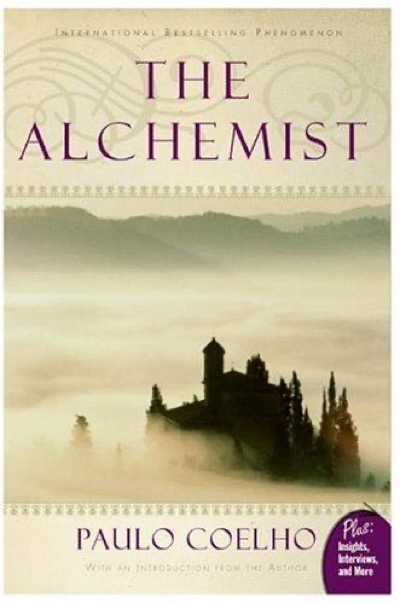
- Paperback edition identified by Utpal Vaishnav through Goodreads; ISBN and copyright-page details remain unverified.
- Reviewed
- August 24, 2026
- Sources
- 6
Lens
How can The Alchemist help a reader move through fear, discover a calling, and be transformed by pursuing it?
Evidence
The Alchemist helped me conquer my fear and discover my unique calling: to be a creator. I learned that the fear we imagine can be greater than fear itself. Listening to your heart can help you understand your connection with something larger than yourself.
My fear was being publicly wrong, especially about subjects in which I considered myself a professional, such as software engineering. Choosing to become a creator led me to experiment with many different things. I still felt the fear, but I did them anyway.
The journey matters as much as the destination, but only if you remain observant. Curiosity makes every experience part of the education. When you keep moving in the direction of your dreams, trials teach you, lessons change you, and detours become necessary parts of growth.
The journey does more than take you toward a goal. It transforms you into someone capable of meeting it.
Evidence and reasoning
1. Fear can be larger in anticipation
My fear was specific: being publicly wrong about subjects I believed I knew well. Software engineering was one of them. The book did not remove that fear. Its practical effect was to help me act while I still felt it.
Santiago’s journey repeatedly makes action precede certainty. He leaves the familiar structure of shepherding, loses his money in Tangier, works for the crystal merchant, and continues across a desert affected by tribal war. The official reading guide treats the theft and the crystal shop as a major diversion through which he learns business and patience. It also asks why the dangers on the route were necessary to reaching the pyramids. The structure of the story supports a narrow conclusion: courage is movement in the presence of fear, not proof that fear has disappeared.
It does not prove that every fear is imaginary or that every risk should be taken. That stronger claim would go beyond both my experience and what a fable can establish.
2. A calling becomes real through action
The book gives Santiago’s calling a name: his Personal Legend. The author-hosted reading guide asks readers to define their own Personal Legend, identify when they first acted on it, and consider what prevented them from completing it. The emphasis is not only on discovering a calling. It is on paying its price in action.
For me, the calling was to become a creator. Choosing it meant experimenting with many different things and accepting the possibility of visible error. Creating converted a private intuition into repeated practice.
3. Listening requires attention, not passive wishing
The story connects the heart, omens, a universal language, and the Soul of the World. Its reading guide asks what that universal language is and places Santiago’s way of learning beside the Englishman’s reliance on books. Listening, in this reading, means noticing relationships among experience, circumstance, and inner conviction rather than waiting for an instruction.
I read this as universal connection. That is a personal and spiritual interpretation, not an empirical claim that the novel proves. Its useful test is whether listening produces closer observation and responsible action. If it merely confirms what someone already wants, it can become wishful thinking.
4. Curiosity turns a route into an education
Santiago learns because he remains involved with what happens to him. The crystal shop is not the destination, but the work changes what he knows. The desert is not merely distance, but a place in which attention matters. The people he meets do not provide one complete doctrine. Each encounter gives him something to observe, test, accept, or outgrow.
This is why the journey matters as much as the destination for the observant person. A detour has no automatic wisdom. Curiosity and reflection are what make experience educational.
5. Transformation is the deeper result
The reading guide explicitly connects alchemy’s transformation of matter with the search for a Personal Legend. Santiago begins by looking for an external treasure. The journey changes his judgment, endurance, relationships, and capacity to recognize what the treasure means.
That structure supports the conclusion at the center of this lens: the journey does more than take you toward a goal. It transforms you into someone capable of meeting it.
Coelho later said that The Alchemist changed his own life and that his continuing work was to express his soul. That authorial comment does not settle the meaning of the novel, but it reinforces the connection between creation, inner expression, and a life changed through practice.
Counter-lens
The book works most safely as a fable and catalyst, not as a general law of success. Its symbolic language can help a reader recognize fear and act. Taken literally, the same language can imply that a sincere desire is destiny, that omens validate a chosen path, or that the universe will support anyone who follows a dream. The story cannot establish those claims.
The tension between agency and fate is unresolved. Santiago must choose, work, learn, and persist, yet maktub, omens, and the Personal Legend suggest that his route has already been written. Rajat Sebastian’s analysis treats this as a conflict between fate and the more adaptive movement associated with Taoist thought. For this lens, the tension is productive only if destiny is read as orientation rather than guarantee.
The story also has social limits. It concentrates on individual courage and attention while giving less weight to resources, obligations, unequal opportunity, and risks that cannot be overcome by belief. A scholarly Orientalist reading by Masha’el Al-Sudeary argues that the novel’s spiritual message is weakened by stereotypical representations of non-Western people. This matters because a story about universal connection should be examined for the people and cultures it simplifies.
There is also a literary objection. Kirkus Reviews criticized the novel’s thin characterization and the way messages attach themselves to nearly every encounter. That weakness may be part of the book’s catalytic strength: readers can project their own turning points into a simple fable. It still means the lens should not confuse emotional usefulness with literary or philosophical completeness.
Reflection
- Verify the ISBN, translator, pagination, and copyright-page details of the paperback edition Utpal read.
- Add page references from that exact copy for the crystal shop, the heart, the universal language, fear, and the final return.
- Confirm whether “conquer my fear” should remain alongside the more precise account that the fear continued while action became possible.
- Verify the final interpretation, source selection, and wording before marking the lens ready.
Limits
The transfer boundary for The Alchemist is built into its question: How can The Alchemist help a reader move through fear, discover a calling, and be transformed by pursuing it? Do not generalize from a memorable example or retrospective success. Test domain, timing, resources, incentives, power, consent, and who bears the downside.
Apply to my situation
For KNOLTOK, treat The Alchemist as a proposed decision aid rather than a personal claim. Its book-specific move is: test one bounded application before generalizing. For this application, record why ‘test one bounded application’ fits the current case, which source supports it, who is affected, and what evidence would block transfer.
Experiment
Use the proposed move from The Alchemist: Test one bounded application before generalizing. Run one low-cost, reversible case. Record the baseline, expected signal, alternative explanation, affected parties, stop condition, and review date. Preserve contrary observations.
Revision
Revise The Alchemist when edition verification changes a book-derived claim, independent evidence changes confidence, or application exposes a material failure mode. Narrow claims that outrun their sources. Retire the mechanism if fair tests repeatedly fail or its harms cannot be contained.
Sources
- Paulo Coelho, The Alchemist, HarperCollins paperback identified by Utpal Vaishnav as published October 17, 2009. Goodreads edition record. ISBN, translator, and pagination still require verification from the physical copy.
- Paulo Coelho, The Alchemist Reading Group Guide. Author-hosted discussion material used to verify the thematic framing of Personal Legend, the crystal-shop detour, universal language, danger, and transformation.
- Lucas Wittmann, “Why Best-Seller Paulo Coelho Thinks Books Should Never Be Made Into Movies”, TIME, October 4, 2018. Author interview used for Coelho’s retrospective view of experience, risk, creative expression, and the effect of the novel on his life.
- Rajat Sebastian, “Rethinking Fate or ‘Maktub’ in Paulo Coelho’s The Alchemist through Taoism”, 2023, DOI 10.1080/23311983.2023.2257018. Used for the tension between fate and adaptive agency.
- “The Alchemist”, Kirkus Reviews, May 1, 1993. Used as a contemporary critical view of the novel’s characterization and message-heavy construction.
- Masha’el Al-Sudeary, “The Alchemy of Literature: Orientalist Perspectives in Coelho’s The Alchemist”. Used for the criticism that the novel’s universalism coexists with stereotypical representations of the East.
Continue the inquiry
Research this book lens with AI
Research The Alchemist as a maintained KNOLTOK lens, not as a summary or endorsement. Reader question: How can The Alchemist help a reader move through fear, discover a calling, and be transformed by pursuing it? Current synthesis: A personal reading of fear, calling, attention, curiosity, and transformation in The Alchemist. Current evidence status: not stated. Selected primary edition and provenance: title: "The Alchemist"; author: "Paulo Coelho"; publisher: "HarperCollins"; publication date: "2009-10-17"; edition note: "Paperback edition identified by Utpal Vaishnav through Goodreads; ISBN and copyright-page details remain unverified."; URL: "https://www.goodreads.com/book/show/1175481.The_Alchemist" Current Lens claim to test: How can The Alchemist help a reader move through fear, discover a calling, and be transformed by pursuing it? Current Counter-lens to strengthen or correct: The book works most safely as a fable and catalyst, not as a general law of success. Its symbolic language can help a reader recognize fear and act. Taken literally, the same language can imply that a sincere desire is destiny, that omens validate a chosen path, or that the universe will support anyone who follows a dream. The story cannot establish those claims. The tension between agency and fate is unresolved. Santiago must choose, work, learn, and persist, yet maktub, omens, and the Personal Legend suggest that his route has already been written. Rajat Current Limits to verify: The transfer boundary for The Alchemist is built into its question: How can The Alchemist help a reader move through fear, discover a calling, and be transformed by pursuing it? Do not generalize from a memorable example or retrospective success. Test domain, timing, resources, incentives, power, consent, and who bears the downside. Practical move under consideration: Run one reversible test and preserve contrary evidence. Research these claims through literary form, authorial context, reception, and the boundary between interpretation and external fact; strategy, organizational evidence, incentives, base rates, selection effects, and stakeholder outcomes; psychology, behavior change, construct validity, intervention evidence, and structural explanations; finance, survivorship, leverage, downside allocation, distribution, and institutional opportunity. Verify book-derived formulations against the selected edition and do not silently substitute another edition. Separate: what the book claims; KNOLTOK's interpretation; independent evidence; application proposals; recognition or influence; credible disagreement; and unresolved uncertainty. Treat sales, fame, anecdotes, cases, and publisher or company claims as reach or self-description, not independent proof. Do not invent quotations, page numbers, personal experience, outcomes, authorial intent, or consensus. Do not infer Utpal Vaishnav's private view beyond the text above. Start with the registered sources below, assess their interests and limitations, and then find stronger primary records, peer-reviewed research, authoritative datasets, critical scholarship, or stakeholder evidence. Do not merely repeat the registered sources: - https://www.goodreads.com/book/show/1175481.The_Alchemist - https://www.paulocoelho.com/wp-content/uploads/2023/11/Alchemist_readinggroupguide.pdf - https://time.com/5415042/paulo-coelho-hippie/ - https://doi.org/10.1080/23311983.2023.2257018 - https://www.kirkusreviews.com/book-reviews/paulo-coelho/the-alchemist/ - https://aauja.yu.edu.jo/index.php/v7n2/625-the-alchemy-of-literature-orientalist-perspectives-in-coelho-s-the-alchemist Return a claim ledger with 6 to 12 material claims. For each provide: exact claim; claim class; attribution; edition or page verification status; best supporting evidence with a direct link; strongest counterevidence or alternative explanation with a direct link; confidence as high, medium, low, or unresolved; transfer conditions; affected stakeholders; possible harm if overstated; and a keep, narrow, rewrite, or remove recommendation. Then provide source-quality notes, missing perspectives, contradictions with the current lens, 3 to 5 proposed revisions, one reversible experiment with baseline and stop condition, and explicit revision or retirement triggers. Use direct links and full citations. Quote only when exact wording materially matters and has been verified.
About this lens
Primary book: The Alchemist by Paulo Coelho, Paperback edition identified by Utpal Vaishnav through Goodreads; ISBN and copyright-page details remain unverified.
Lens author: Utpal Vaishnav. The interpretation, personal experience, and conclusions belong to the lens author.
AI assistance: AI assisted with research, structure, and synthesis. The personal reading and lived experience are Utpal Vaishnav's; all interpretations and source selections were accepted by Utpal Vaishnav for publication.
Human review: Utpal Vaishnav
- 2026-08-13: Prepared with AI as a research scaffold from Utpal Vaishnav's authorial input.
- 2026-08-13: Added a sourced research layer; source acceptance and interpretation remain pending human review.
- 2026-08-14: Moved provenance into an expandable disclosure and added a reusable research prompt.
- 2026-08-15: Localized and optimized the confirmed cover image.