
Book lens / Published
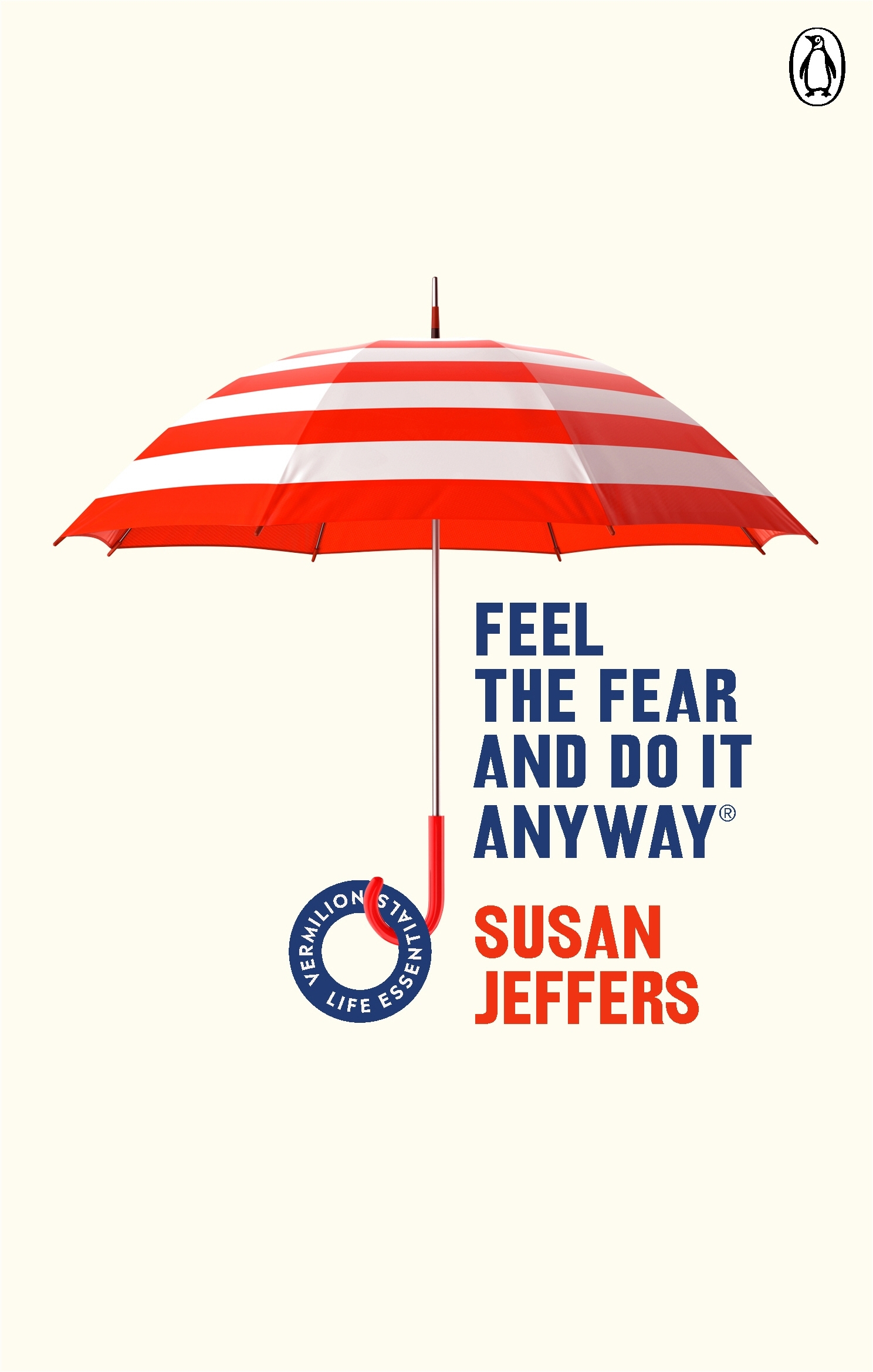
Feel the Fear and Do It Anyway
What changes when I stop waiting for fear to disappear and act while it is still present?
A lens on fear as a recurring companion to unfamiliar action, and on the uncommon advantage earned by people who move before confidence arrives.
- Edition
- Confirmed revised digital edition supplied by Utpal Vaishnav. ISBN 9781448175178. His Kindle record lists a print length of 242 pages and a 2.2 MB file size; Penguin's edition record lists 272 pages.
- Reviewed
- August 25, 2026
- Sources
- 1
Lens
Fear is always there.
It changes shape as the territory changes, but waiting for its permanent disappearance means waiting for a condition that may never arrive. The people who move anyway are a select few. Their distinction is not fearlessness. It is their refusal to give fear sole authority over action.
This does not make every bold move wise. It means that once the risk has been understood and bounded, fear alone is not a sufficient reason to remain still.
Evidence
Fear belongs to unfamiliar territory
New responsibility, a difficult conversation, a public commitment, or a meaningful piece of work can all produce fear. The feeling does not necessarily mean the direction is wrong. It may simply mean the next step exceeds what is familiar.
If fear is treated as a stop signal every time, the familiar becomes a cage.
Action comes before confidence
Confidence is often imagined as the fuel required to begin. In practice, it may be the residue of beginning, learning, adjusting, and discovering that the consequences can be handled.
Action creates evidence. It shows which fears were accurate, which were exaggerated, what preparation was missing, and what capacity already existed.
The select few move with fear present
Most people can identify a reason to wait. More certainty. More preparation. A better time. A calmer mind.
The select few do not necessarily have less fear. They accept fear as part of movement and take the next responsible action while others continue negotiating with the feeling.
Their advantage compounds. Each action produces information, skill, relationships, and a larger sense of what can be handled. Inaction produces none of these.
Apply to my situation
Use this lens when the action is meaningful, the danger is bounded, and the main obstacle is the expectation that readiness must feel comfortable.
A practical test:
- Name the action being postponed.
- Separate the feared feeling from the actual downside.
- Reduce the move until the downside is understandable and containable.
- Define a stopping condition.
- Act without requiring fear to disappear.
- Review what reality taught you before taking the next step.
The aim is not a dramatic leap. It is contact with reality.
Counter-lens
Fear is not always an illusion to push through. It can carry information about physical danger, coercion, financial exposure, legal risk, inadequate preparation, or harm that will fall on someone else.
Acting despite fear is not permission for recklessness. A reversible experiment deserves a different threshold from an irreversible commitment. Courage does not transfer the downside to people who did not choose it.
Persistent anxiety can also exceed the reach of a motivational frame. When fear significantly impairs daily life, qualified clinical support may be more useful than another demand to act.
The phrase “select few” is a point of view about behavior, not a statistical claim or a badge of superiority. The distinction has to be earned again at each threshold. Yesterday’s courage does not make today’s judgment automatically sound.
Reflection
- When is fear useful information, and when is it avoidance protecting the familiar?
- Which forms of action build capacity without creating reckless exposure?
- How does repeated action change self-efficacy, even when fear remains?
- When does preparation reduce real risk, and when does it become indefinite postponement?
- What support makes courageous action possible for people facing unequal constraints?
Limits
The transfer boundary for Feel the Fear and Do It Anyway is built into its question: What changes when I stop waiting for fear to disappear and act while it is still present? Do not generalize from a memorable example or retrospective success. Test domain, timing, resources, incentives, power, consent, and who bears the downside.
Experiment
Use the proposed move from Feel the Fear and Do It Anyway: Name one useful action you are postponing until you feel ready. Reduce it to a bounded step you can take today, define the real risk and a stopping condition, then take the step without requiring fear to leave first. Run one low-cost, reversible case. Record the baseline, expected signal, alternative explanation, affected parties, stop condition, and review date. Preserve contrary observations.
Sources
- Susan Jeffers, Feel the Fear and Do It Anyway: Dynamic Techniques for Turning Fear, Indecision, and Anger into Power, Action, and Love. Revised digital edition, Ebury Digital, December 17, 2014. ISBN 9781448175178. Utpal Vaishnav’s Kindle record lists 242 pages; Penguin lists 272 pages. Penguin edition record.
Revision
- Evidence status: practice-informed. The central point of view is Utpal Vaishnav’s. The edition metadata is confirmed; the pagination discrepancy is preserved for future resolution.
- Curated and authored by Utpal Vaishnav.
- Last substantive revision: August 25, 2026.
Continue the inquiry
Research this book lens with AI
Research Feel the Fear and Do It Anyway as a maintained KNOLTOK lens, not as a summary or endorsement. Reader question: What changes when I stop waiting for fear to disappear and act while it is still present? Current synthesis: A lens on fear as a recurring companion to unfamiliar action, and on the uncommon advantage earned by people who move before confidence arrives. Current evidence status: practice-informed. Selected primary edition and provenance: title: "Feel the Fear and Do It Anyway: Dynamic Techniques for Turning Fear, Indecision, and Anger into Power, Action, and Love"; author: "Susan Jeffers"; publisher: "Ebury Digital"; publication date: "2014-12-17"; edition note: "Confirmed revised digital edition supplied by Utpal Vaishnav. ISBN 9781448175178. His Kindle record lists a print length of 242 pages and a 2.2 MB file size; Penguin's edition record lists 272 pages."; URL: "https://www.penguin.com.au/books/feel-the-fear-and-do-it-anyway-9781448175178" Current Lens claim to test: Fear is always there. It changes shape as the territory changes, but waiting for its permanent disappearance means waiting for a condition that may never arrive. The people who move anyway are a select few. Their distinction is not fearlessness. It is their refusal to give fear sole authority over action. This does not make every bold move wise. It means that once the risk has been understood and bounded, fear alone is not a sufficient reason to remain still. Current Counter-lens to strengthen or correct: Fear is not always an illusion to push through. It can carry information about physical danger, coercion, financial exposure, legal risk, inadequate preparation, or harm that will fall on someone else. Acting despite fear is not permission for recklessness. A reversible experiment deserves a different threshold from an irreversible commitment. Courage does not transfer the downside to people who did not choose it. Persistent anxiety can also exceed the reach of a motivational frame. When fear significantly impairs daily life, qualified clinical support may be more useful than another demand to act. The phrase "select Current Limits to verify: The transfer boundary for Feel the Fear and Do It Anyway is built into its question: What changes when I stop waiting for fear to disappear and act while it is still present? Do not generalize from a memorable example or retrospective success. Test domain, timing, resources, incentives, power, consent, and who bears the downside. Practical move under consideration: Name one useful action you are postponing until you feel ready. Reduce it to a bounded step you can take today, define the real risk and a stopping condition, then take the step without requiring fear to leave first. Research these claims through psychology, behavior change, construct validity, intervention evidence, and structural explanations; systems research, causal mechanisms, measurement, feedback, boundary conditions, and second-order effects; finance, survivorship, leverage, downside allocation, distribution, and institutional opportunity; learning science, epistemology, replication, transfer, measurement, and alternative explanations. Verify book-derived formulations against the selected edition and do not silently substitute another edition. Separate: what the book claims; KNOLTOK's interpretation; independent evidence; application proposals; recognition or influence; credible disagreement; and unresolved uncertainty. Treat sales, fame, anecdotes, cases, and publisher or company claims as reach or self-description, not independent proof. Do not invent quotations, page numbers, personal experience, outcomes, authorial intent, or consensus. Do not infer Utpal Vaishnav's private view beyond the text above. Start with the registered sources below, assess their interests and limitations, and then find stronger primary records, peer-reviewed research, authoritative datasets, critical scholarship, or stakeholder evidence. Do not merely repeat the registered sources: - https://www.penguin.com.au/books/feel-the-fear-and-do-it-anyway-9781448175178 Return a claim ledger with 6 to 12 material claims. For each provide: exact claim; claim class; attribution; edition or page verification status; best supporting evidence with a direct link; strongest counterevidence or alternative explanation with a direct link; confidence as high, medium, low, or unresolved; transfer conditions; affected stakeholders; possible harm if overstated; and a keep, narrow, rewrite, or remove recommendation. Then provide source-quality notes, missing perspectives, contradictions with the current lens, 3 to 5 proposed revisions, one reversible experiment with baseline and stop condition, and explicit revision or retirement triggers. Use direct links and full citations. Quote only when exact wording materially matters and has been verified.
About this lens
Primary book: Feel the Fear and Do It Anyway by Susan Jeffers, Confirmed revised digital edition supplied by Utpal Vaishnav. ISBN 9781448175178. His Kindle record lists a print length of 242 pages and a 2.2 MB file size; Penguin's edition record lists 272 pages.
Lens author: Utpal Vaishnav. The interpretation, personal experience, and conclusions belong to the lens author.
AI assistance: AI assisted with bibliographic research, structure, and editing. Utpal Vaishnav supplied the central point of view that fear remains present and that the select few distinguish themselves by acting despite it.
Human review: Utpal Vaishnav
- 2026-08-25: Published the accepted lens with the confirmed Ebury Digital edition, official cover, and a preserved pagination discrepancy between the owner-supplied Kindle record and Penguin's edition record.