
Book lens / Published
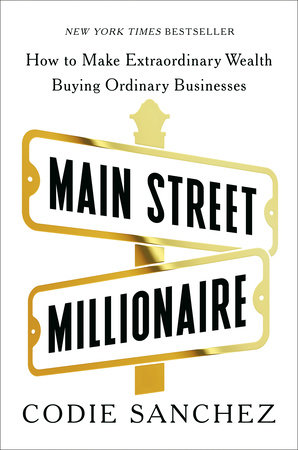
Main Street Millionaire
Does buying an existing business create patient stewardship, or merely turn another livelihood into an asset class?
A lens on acquisition entrepreneurship, continuity, leverage, labor, and the responsibilities that arrive with ownership.
- Edition
- ISBN 9780593718612.
- Reviewed
- August 26, 2026
- Sources
- 1
Lens
Startup culture celebrates invention. Acquisition entrepreneurship begins elsewhere: many useful businesses already exist, their owners are aging, and continuity may be more valuable than disruption. Buying one can preserve customers, jobs, supplier relationships, and accumulated operating knowledge.
The book makes this path visible and teaches readers to look at cash flow, financing, diligence, and ordinary industries. That is a useful correction to the belief that ownership requires a novel idea or venture capital.
Yet the language of overlooked assets can make a living institution look like a yield instrument. A laundromat, repair company, clinic, or logistics firm is also a network of workers and obligations. The buyer acquires authority over people who did not choose the transaction.
Evidence
- Existing demand can reduce one source of startup uncertainty.
- Succession is an economic and human problem, not only a transaction opportunity.
- Seller knowledge and customer trust may be more important than visible equipment.
- Financing structure shapes behavior after the acquisition.
- Boring work can create meaningful value without becoming a cultural spectacle.
These insights support a broader definition of entrepreneurship. Building can mean preserving and improving, not only founding.
The leverage behind the promise
Acquisition examples can make cash flow appear stable while underplaying concentration, deferred maintenance, owner dependence, regulation, labor scarcity, and economic cycles. Debt amplifies errors. Seller financing may align interests, but it can also postpone conflict over representations and performance.
The buyer’s media ecosystem is another risk. Courses, communities, and deal services can profit from increasing confidence before the reader has the skill or capital to carry downside. Bestseller status and follower counts show attention, not expected return.
There is also a moral hazard in optimization. Raising margins by cutting training, wages, safety, or service quality may improve a spreadsheet while consuming the institution being purchased. Stewardship requires a longer ledger.
The continuity ledger
Alongside financial diligence, record stakeholder promises. What do employees reasonably expect about pay, schedules, and dignity? What service continuity do customers rely on? What knowledge sits with the seller? Which supplier relationships depend on trust? What community cost appears if the business closes?
Not every promise can remain unchanged. The point is to make tradeoffs visible before the purchase price creates pressure to deny them.
Experiment
Select one listed business without contacting the seller. Build two models using public information: the buyer return case and the continuity case. Add failure scenarios involving customer loss, key-person departure, working capital, and debt service. If the deal works only by transferring risk to people with less power, reject the thesis before pursuing the asset.
Reflection
- What do independent datasets show about acquisition survival and returns?
- How often do seller-financed deals default or renegotiate?
- Which practices preserve worker and customer value after succession?
- What claims are book-derived, and which belong to the author’s commercial ecosystem?
Revision
- Evidence status: mixed.
- Bestseller recognition does not validate projected acquisition returns.
- Curated and authored by Utpal Vaishnav; no investment experience is claimed.
- Publication state: published on August 26, 2026.
Counter-lens
For Main Street Millionaire, test the strongest answer to the same reader question: Does buying an existing business create patient stewardship, or merely turn another livelihood into an asset class? Ask whether context, selection, incentives, prior capability, power, or survivorship explains the result better than the book’s favored mechanism. Disagreement is evidence to examine, not proof that the reader failed to understand the author.
Limits
The transfer boundary for Main Street Millionaire is built into its question: Does buying an existing business create patient stewardship, or merely turn another livelihood into an asset class? Do not generalize from a memorable example or retrospective success. Test domain, timing, resources, incentives, power, consent, and who bears the downside.
Apply to my situation
For KNOLTOK, treat Main Street Millionaire as a proposed decision aid rather than a personal claim. Its book-specific move is: For one acquisition idea, build a second ledger listing every stakeholder promise that must survive the transaction. For this application, record why ‘For one acquisition idea, build a second ledger listing every stakeholder promise that must survive the transaction’ fits the current case, which source supports it, who is affected, and what evidence would block transfer.
Continue the inquiry
Research this book lens with AI
Research Main Street Millionaire as a maintained KNOLTOK lens, not as a summary or endorsement. Reader question: Does buying an existing business create patient stewardship, or merely turn another livelihood into an asset class? Current synthesis: A lens on acquisition entrepreneurship, continuity, leverage, labor, and the responsibilities that arrive with ownership. Current evidence status: mixed. Selected primary edition and provenance: title: "Main Street Millionaire: How to Make Extraordinary Wealth Buying Ordinary Businesses"; author: "Codie Sanchez"; publisher: "Portfolio"; publication date: "2024-12-03"; edition note: "ISBN 9780593718612."; URL: "https://www.penguinrandomhouse.com/books/748704/main-street-millionaire-by-codie-sanchez/" Current Lens claim to test: Startup culture celebrates invention. Acquisition entrepreneurship begins elsewhere: many useful businesses already exist, their owners are aging, and continuity may be more valuable than disruption. Buying one can preserve customers, jobs, supplier relationships, and accumulated operating knowledge. The book makes this path visible and teaches readers to look at cash flow, financing, diligence, and ordinary industries. That is a useful correction to the belief that ownership requires a novel idea or venture capital. Yet the language of overlooked assets can make a living institution look like a yield instrument. A laundromat, repair company, clinic, or Current Counter-lens to strengthen or correct: For Main Street Millionaire, test the strongest answer to the same reader question: Does buying an existing business create patient stewardship, or merely turn another livelihood into an asset class? Ask whether context, selection, incentives, prior capability, power, or survivorship explains the result better than the book's favored mechanism. Disagreement is evidence to examine, not proof that the reader failed to understand the author. Current Limits to verify: The transfer boundary for Main Street Millionaire is built into its question: Does buying an existing business create patient stewardship, or merely turn another livelihood into an asset class? Do not generalize from a memorable example or retrospective success. Test domain, timing, resources, incentives, power, consent, and who bears the downside. Practical move under consideration: For one acquisition idea, build a second ledger listing every stakeholder promise that must survive the transaction. Research these claims through literary form, authorial context, reception, and the boundary between interpretation and external fact; strategy, organizational evidence, incentives, base rates, selection effects, and stakeholder outcomes; psychology, behavior change, construct validity, intervention evidence, and structural explanations; systems research, causal mechanisms, measurement, feedback, boundary conditions, and second-order effects. Verify book-derived formulations against the selected edition and do not silently substitute another edition. Separate: what the book claims; KNOLTOK's interpretation; independent evidence; application proposals; recognition or influence; credible disagreement; and unresolved uncertainty. Treat sales, fame, anecdotes, cases, and publisher or company claims as reach or self-description, not independent proof. Do not invent quotations, page numbers, personal experience, outcomes, authorial intent, or consensus. Do not infer Utpal Vaishnav's private view beyond the text above. Start with the registered sources below, assess their interests and limitations, and then find stronger primary records, peer-reviewed research, authoritative datasets, critical scholarship, or stakeholder evidence. Do not merely repeat the registered sources: - https://www.penguinrandomhouse.com/books/748704/main-street-millionaire-by-codie-sanchez/ Return a claim ledger with 6 to 12 material claims. For each provide: exact claim; claim class; attribution; edition or page verification status; best supporting evidence with a direct link; strongest counterevidence or alternative explanation with a direct link; confidence as high, medium, low, or unresolved; transfer conditions; affected stakeholders; possible harm if overstated; and a keep, narrow, rewrite, or remove recommendation. Then provide source-quality notes, missing perspectives, contradictions with the current lens, 3 to 5 proposed revisions, one reversible experiment with baseline and stop condition, and explicit revision or retirement triggers. Use direct links and full citations. Quote only when exact wording materially matters and has been verified.
About this lens
Primary book: Main Street Millionaire by Codie Sanchez, ISBN 9780593718612.
Lens author: Utpal Vaishnav. The interpretation, personal experience, and conclusions belong to the lens author.
AI assistance: AI assisted with research, structure, and drafting. No acquisition return, company scale, or personal investment experience was invented.
Human review: Utpal Vaishnav
- 2026-08-26: Prepared the K200-B03 local review lens.
- 2026-08-26: Verified the portrait cover against the publisher ISBN endpoint.